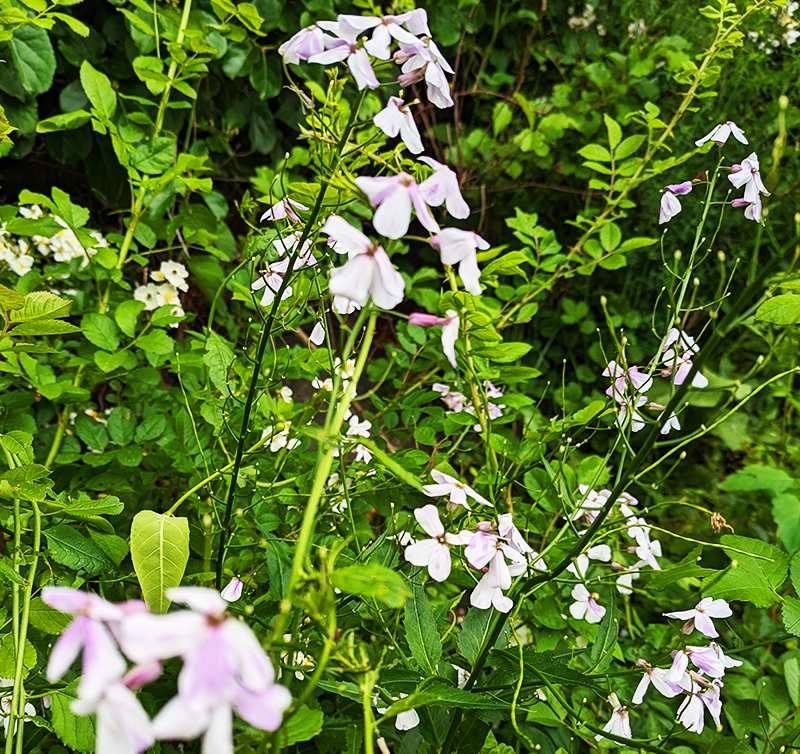
Seaside Bittercress
Taxonomy
Kingdom: Plantae
Clade: Tracheophytes
Clade: Angiosperms
Clade: Eudicots
Order: Brassicales
Family: Brassicaceae
Genus: Cardamine
Species: Cardamine angulata Hook.
Common Names by Region
North America: Seaside Bittercress, Coastal Bittercress
Pacific Northwest: Bittercress, Coastal Cardamine
Botanical / Field Guides: Cardamine angulata
Description
Growth Habit
- Perennial herbaceous plant.
- Forms low-growing to moderately upright clumps.
- Spreads slowly via rhizomes and seed in suitable wet habitats.
Size
- Typically 1–3 feet (30–90 cm) in height.
- Spread varies with moisture availability.
Leaves
- Basal leaves form a rosette; pinnately divided with rounded to angular lobes.
- Stem leaves are alternate and smaller, often less divided.
- Medium green to dark green; smooth to lightly textured.
Flowers
- Small, four-petaled flowers typical of the mustard family.
- Color ranges from white to pale pink or light lavender.
- Arranged in loose terminal clusters.
- Blooms from late spring through summer, depending on moisture conditions.
Known Range
Native Range
- Native to western North America.
- Found from coastal Alaska south through British Columbia, Washington, Oregon, and into northern California.
Habitat Range
- Common in coastal wetlands, wet meadows, streambanks, seeps, and estuarine margins.
- Frequently associated with consistently moist or seasonally flooded soils.
Care Requirements
Light
- Prefers full sun to partial shade.
- Tolerates more shade in wetter environments.
Watering
- High moisture preference.
- Thrives in consistently wet soils; poorly tolerant of drought.
Soil
- Prefers moist to saturated soils.
- Tolerates sandy, silty, or loamy substrates.
- Often found in mildly acidic to neutral soils.
Humidity
- Naturally adapted to high humidity and coastal air.
Temperature
- Hardy in USDA Zones 4–9.
- Tolerates cool coastal climates and mild frosts.
Propagation
- Propagates by seed and vegetative spread via rhizomes.
- Seeds readily establish in disturbed wet soils.
- Can be divided carefully in early spring or fall.
Common Pests / Diseases
- Generally resistant to serious pest pressure.
- Occasionally affected by aphids or flea beetles.
- Fungal issues are uncommon but may appear in stagnant conditions.
Additional Notes
Special Features
- Important native species for wetland and riparian restoration projects.
- Attracts native pollinators, including bees and small flies.
- Serves as a larval host plant for certain butterfly species.
Ecological Value
- Stabilizes moist soils along streams and wetlands.
- Contributes to native plant diversity in coastal ecosystems.
Maintenance Level
- Low maintenance in appropriate wet habitats.
- Not considered invasive within its native range.
- Best used in restoration, rain gardens, or naturalized wetland plantings rather than dry ornamental beds.
Field Notes: Bittercress, or Something Else?
If you spend any time near creeks, ditches, rain-soaked fields, or the soft edges where land gives up and water takes over, you’ve probably noticed it:
small white flowers, four petals, delicate stems, nothing that screams for attention.
“Bittercress,” someone says. And they’re not wrong—just not always right.
The problem is that bittercress isn’t one plant. It’s a whole cluster of plants that look similar at a glance, behave very differently, and quietly shape the spaces they occupy.
Learning the difference matters.
The Native: Seaside Bittercress (Cardamine angulata)
When Cardamine angulata shows up, it tends to do so politely.
You’ll find it where water lingers:
stream edges, seeps, wet meadows, coastal lowlands. The soil stays dark and cool. The plant stays put.
What to notice:
- Grows as a perennial, returning year after year
- Forms modest clumps rather than carpets
- Leaves are divided but not frantic—rounded lobes, calm geometry
- Flowers are small, pale, and unshowy
- The plant occupies space without trying to conquer it
It belongs where it grows. It stabilizes soil, feeds pollinators, and quietly fills a niche without shoving everything else aside.
This is what a working ecosystem looks like.
The Lookalikes: Where Trouble Starts
Most confusion comes from two non-native relatives that have learned how to exploit disturbed ground better than they belong there.
Hairy Bittercress (Cardamine hirsuta)
This is the one people curse without knowing its name.
It favors:
- Lawns
- Garden beds
- Sidewalk cracks
- Any soil recently disturbed and left bare
Tells:
- Short, fast-growing annual
- Hairy stems and leaves
- Explosive seed pods that fling seeds several feet
- Shows up early, spreads fast, disappears just as quickly
It’s not evil—but it’s opportunistic. It thrives in human-made gaps and spreads aggressively where stability is already compromised.
Garlic Mustard (Alliaria petiolata)
This one is the real problem.
Garlic mustard looks innocent when young—heart-shaped leaves, small white flowers—but it plays a long game.
Tells:
- Two-year lifecycle
- Strong garlic smell when crushed
- Dense colonies that shade out natives
- Alters soil chemistry in its favor
Where garlic mustard takes hold, native understory plants stop regenerating. It doesn’t just compete—it changes the rules.
How to Tell Who Belongs
When you’re standing in the field, don’t start with a name. Start with behavior.
Ask:
- Is this plant forming a monoculture or sharing space?
- Is the soil wet and intact—or recently disturbed?
- Does it return in the same place year after year?
- Are there multiple native species around it, or fewer each season?
Native bittercress fits into a system.
Invasives rewrite it.
Why This Matters
At a glance, these plants all look small. Harmless. Forgettable.
But landscapes don’t collapse all at once. They shift by inches—by which species gain ground and which quietly disappear.
Knowing the difference between Cardamine angulata and its lookalikes isn’t trivia. It’s literacy.
It’s learning to read the land before it finishes writing you out of the story.
Field Note, Not a Rule
If you’re restoring land, planting near water, or managing edges, learn your bittercress before you pull—or before you plant.
Some plants are guests.
Some are neighbors.
Some are squatters.
They don’t announce which they are. You have to watch.
—
Blue Ribbon Team field notes are observations, not edicts. Learn the place first. Then decide what it needs.
Post Views: 234