
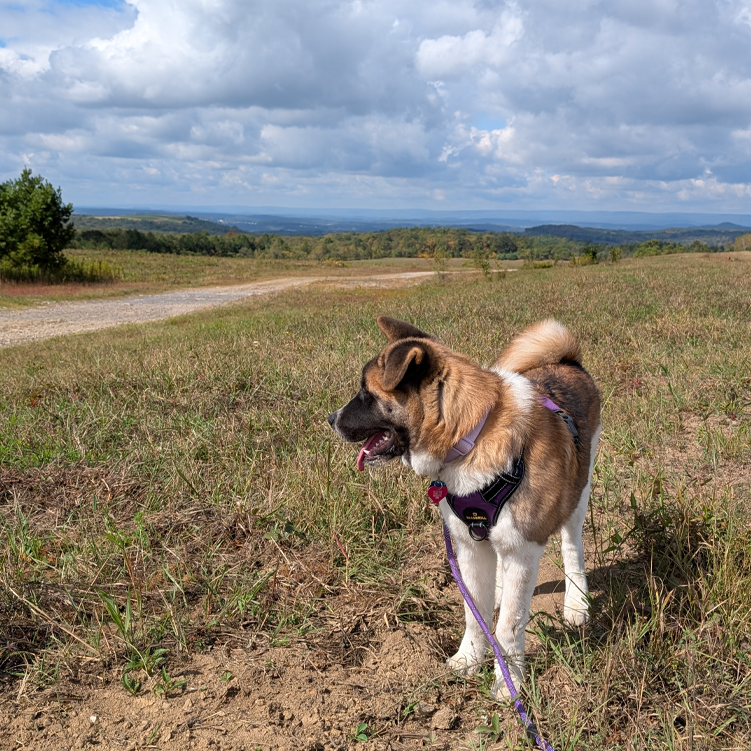
Kingdom: Animalia
Phylum: Chordata
Class: Mammalia
Order: Carnivora
Family: Canidae
Genus: Canis
Species: Canis lupus familiaris
Breed: American Akita
North America: American Akita, Akita, American Akita Dog
Japan / International Kennel Community: American Akita (to distinguish from the Japanese Akita Inu)
Working & Show Circles: Great Japanese Dog (historical term, now outdated)
Height: 61–71 cm (24–28 in) at the shoulder
Weight: 32–59 kg (70–130 lbs), with males generally larger
Build: Powerful, heavy-boned, and broad-headed with a deep chest and a strong, muscular frame.
Coat: Double-coated; outer coat is dense and straight, undercoat soft and thick.
Coloration: Wide variety including pinto, brindle, red, fawn, white, and combinations. Masking (especially dark facial masks) is common in American lines.
Tail: Thick, full, and characteristically curled over the back.
Temperament: Dignified, loyal, confident, and reserved with strangers; deeply bonded to family members. Known for quiet observance rather than excessive barking.
Domesticated Range: Found across North America, Europe, and increasingly in regions with colder climates where their heavy coats are advantageous.
Preferred Environment: Homes with space, secure fencing, and cooler temperatures. Thrives in structured households with consistent training.
Working Heritage: Developed as a versatile working dog — guardian, hunting companion, sledding assistant, and protector.
Life Span: 10–14 years
Maturity: Reaches full physical maturity around 18–24 months, though mental maturity can take longer.
Reproduction: Average litter size 3–12 puppies. Require experienced handling due to protective maternal instincts.
Behavioral Traits:
Exercise Needs: Moderate to high. Daily structured exercise and mental stimulation recommended.
Training: Responds best to confident, consistent, respectful leadership; overly harsh methods are counterproductive.
Domesticated Breed Status: Stable, well-established breed recognized by major kennel clubs (AKC, UKC, etc.).
Primary Welfare Concerns:
Breed Preservation Measures:
Special Features:
Historical Context:
Role in Human Society: