
Kingdom: Animalia
Phylum: Chordata
Class: Aves
Order: Passeriformes
Family: Fringillidae
Genus: Carpodacus
Species: Carpodacus erythrinus (Pallas, 1770)
General / English: Common Rosefinch
Scientific / Ornithological: Carpodacus erythrinus
Regional (Europe / Asia): Scarlet Finch, Rose Finch (colloquial variations)
The Common Rosefinch is a small passerine bird distinguished by its compact build, thick conical bill, and sexually dimorphic plumage.
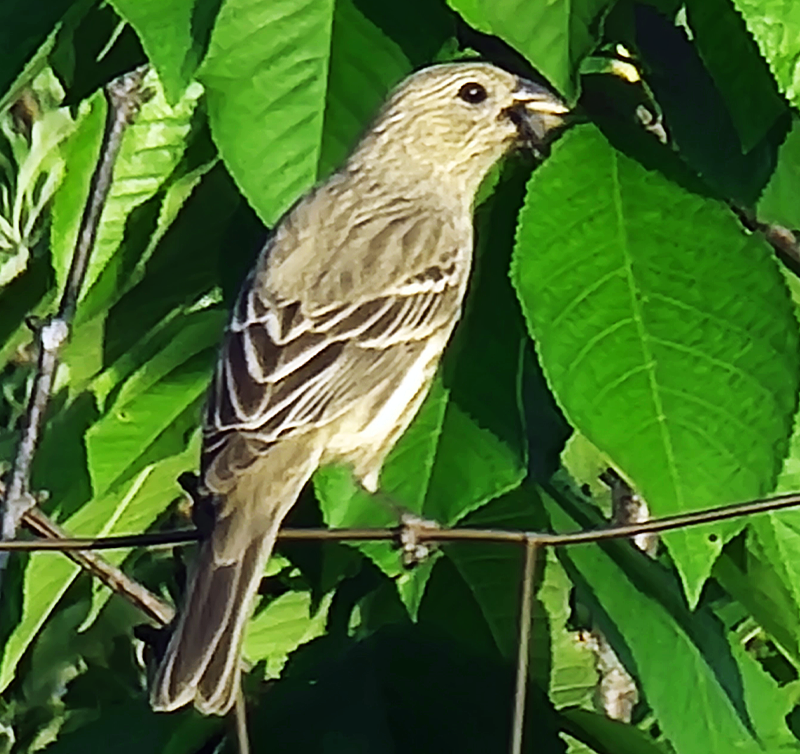
Adult males are notable for their rose-red to crimson coloration across the head, breast, and rump, with darker brown wings and tail. Females and juveniles lack red pigmentation and display streaked brown and buff tones, providing effective camouflage in dense vegetation.
The species has a rounded head, short neck, and relatively long tail. Facial expression is subtle but alert, with dark, bead-like eyes adapted for scanning foliage and ground cover.
Typical size:
Flight is direct and undulating, characteristic of finches, with short bursts rather than sustained gliding.
The Common Rosefinch occupies a broad Palearctic range, breeding across:
During winter, populations migrate south to:
Preferred habitats include:
The species favors transitional zones where dense cover meets open feeding areas, relying on vegetation structure rather than altitude or specific forest type.
The Common Rosefinch maintains an omnivorous but plant-forward diet consisting of:
By consuming and dispersing seeds, rosefinches contribute to plant propagation across fragmented landscapes. Insect predation during nesting season supports local population balance among small arthropods.
Their flexible diet allows them to exploit seasonal abundance without over-specialization.
Common Rosefinches are generally quiet and unobtrusive outside the breeding season.
Behavioral traits include:
The male’s song is soft, warbling, and flute-like — often delivered from concealed perches rather than exposed song posts. Vocalization serves more as territory marking than dominance display.
Outside breeding periods, individuals may form loose, non-hierarchical groups.
Breeding occurs during late spring and early summer.
Females perform most incubation duties, while males provide territory defense and supplementary feeding. Fledglings remain dependent for a short period before dispersing into surrounding habitat.
Reproductive success is closely tied to vegetation density and insect availability.
IUCN Status: Least Concern
Despite localized habitat pressures, the species maintains stable populations across much of its range. Its adaptability to semi-managed landscapes has allowed it to persist where more specialized species decline.
Primary pressures include:
The Common Rosefinch often lives near human-modified environments without drawing attention. Its subdued behavior and seasonal coloration make it more often heard than seen.
In many regions, it is regarded as a quiet marker of seasonal transition — arriving with spring growth and departing as vegetation thins.
The Common Rosefinch represents resilience through restraint. It does not dominate space, announce itself loudly, or demand attention. Its success lies in fitting into the margins — hedges, edges, and in-between places.
It reminds us that not all stability comes from control or expansion. Some systems endure by occupying the overlooked spaces and moving only when the season is right.