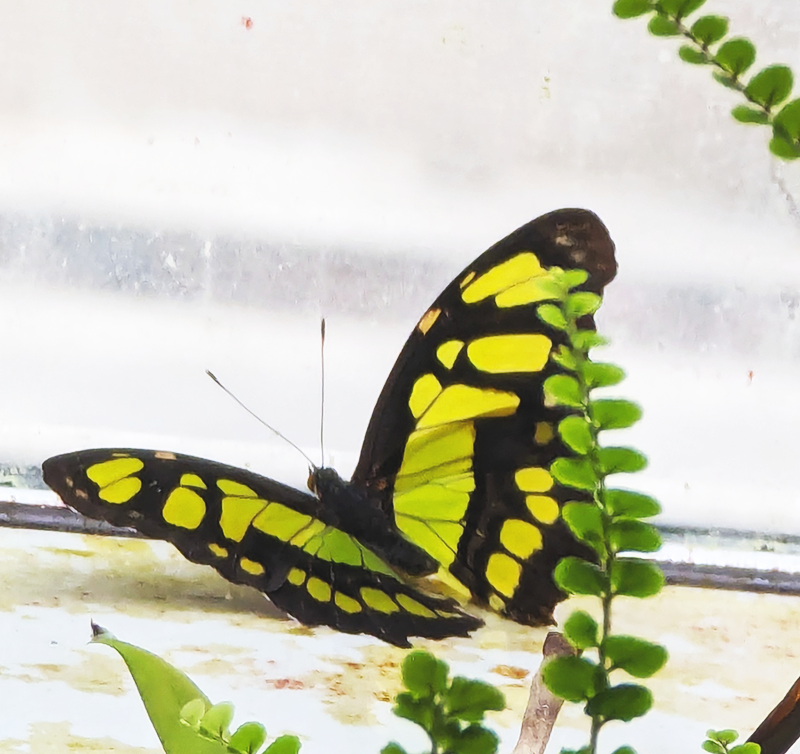
Siproeta stelenes

Comments:0 Comments

Malachite Butterfly

Taxonomy

Kingdom: Animalia
Phylum: Arthropoda
Class: Insecta
Order: Lepidoptera
Family: Nymphalidae
Genus: Siproeta
Species: Siproeta stelenes (Linnaeus, 1758)

Common Names

  • Malachite
  • Malachite Butterfly
  • Green Malachite
  • Tropical Malachite


Description

Physical Characteristics

The Malachite is a large, unmistakable butterfly known for its bold coloration and strong, gliding flight. The wings are predominantly deep black to dark brown, overlaid with vivid, translucent green patches that resemble polished malachite stone. These green areas vary in shape and intensity, forming bands and panels across both forewings and hindwings.

The underside of the wings contrasts sharply, displaying lighter olive, tan, and gray tones with leaf-like patterning that provides excellent camouflage when the butterfly is at rest. Adults typically have a wingspan of 90–110 mm (3.5–4.3 inches), making them one of the larger butterflies within their range. Males and females are similar in appearance, with females sometimes slightly larger.


Habitat & Distribution

Malachite butterflies are native to the Neotropics, ranging from southern Texas and Mexico through Central America and into South America, including parts of Brazil, Peru, and the Caribbean.

They favor tropical and subtropical forests, forest edges, river corridors, and secondary growth areas. Unlike many butterflies, Malachites are often seen in shaded woodland paths rather than open meadows, frequently flying along streams and damp areas.


Behavior & Ecology

  • Strong, confident fliers that glide between bursts of rapid wingbeats
  • Frequently observed patrolling forest edges and shaded trails
  • Often rest with wings open, displaying their vivid green coloration
  • Males may engage in territorial behavior, chasing intruders from favored perches
  • Adults are long-lived compared to many butterfly species

Malachites are commonly seen feeding at rotting fruit, tree sap, and mineral-rich mud, rather than visiting flowers as frequently as nectar-feeding butterflies.


Diet

Larval Diet

  • Caterpillars primarily feed on plants in the Acanthaceae family
  • Common host plants include Blechum species and Ruellia species

Adult Diet

  • Fermenting fruit
  • Tree sap
  • Mineral-rich mud and moist soil
  • Occasionally nectar


Life Cycle & Reproduction

  • Females lay eggs singly on the underside of host plant leaves
  • Caterpillars are cryptically colored, often green with subtle striping
  • Pupation occurs in a suspended chrysalis, usually attached to vegetation
  • Multiple generations per year occur in warmer regions
  • Development from egg to adult typically takes several weeks, depending on temperature and humidity


Conservation & Sustainability

The Malachite butterfly is not currently considered threatened and remains common throughout much of its range. However, local populations can be affected by:

  • Habitat loss due to deforestation
  • Reduction of host plants
  • Pesticide use

Maintaining forest corridors and native understory plants supports healthy populations.


Additional Notes

  • The Malachite’s coloration is often cited as one of the most striking examples of green pigmentation in butterflies
  • Commonly featured in butterfly houses due to its size, longevity, and dramatic appearance
  • Its flight pattern—powerful yet deliberate—makes it a favorite among butterfly watchers and photographers
Spread the love

Categories:

Leave a Reply