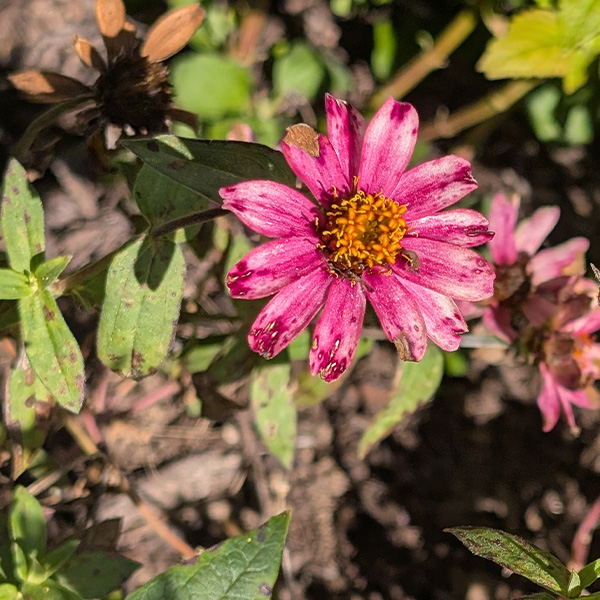
Zinnia
Taxonomy
- Kingdom: Plantae
- Clade: Tracheophytes
- Clade: Angiosperms
- Clade: Eudicots
- Order: Asterales
- Family: Asteraceae
- Genus: Zinnia
- Species: Zinnia elegans Jacq.
Common Names by Region
- General / English: Common Zinnia, Elegant Zinnia
- United States / Canada: Garden Zinnia, Tall Zinnia
- United Kingdom / Ireland: Zinnia
- Horticulture Trade: Cut-Flower Zinnia, Bedding Zinnia, Giant Zinnia (cultivar groups)
Description
Growth Habit
Zinnia elegans is a fast-growing, upright annual forming sturdy, branching stems. Plants range from compact bedding forms to tall, cut-flower types, producing continuous blooms through summer and early fall.
Size
- Height: 8 in–4 ft (20 cm–1.2 m), cultivar-dependent
- Spread: 6–24 in (15–60 cm)
Leaves
- Opposite, ovate to lance-shaped
- Rough-textured, slightly hairy
- Medium to deep green
- Sessile (attached directly to stem)
Flowers
- Composite flower heads (Asteraceae)
- Colors: red, pink, orange, yellow, purple, white, green, bi-color
- Forms: single, semi-double, double, cactus-type, dahlia-type
- Central disc usually yellow to orange
- Long-lasting and highly attractive to pollinators
Stems
- Stiff, upright, slightly pubescent
- Excellent structural support for large blooms
Known Range
- Native Range: Central and southern Mexico
- Introduced/Cultivated: Worldwide in temperate and subtropical regions
Primarily grown as an ornamental; rarely naturalized outside cultivation.
Care / Habitat
Light
- Full sun (6+ hours daily)
- Poor flowering in shade
Soil
- Well-drained, moderately fertile soil
- Tolerates poor soils if drainage is good
- pH: Neutral to slightly acidic
Water
- Moderate water needs
- Drought-tolerant once established
- Avoid overhead watering to reduce disease
Temperature
- Warm-season annual
- Optimal: 70–90°F (21–32°C)
- Killed by frost
Spacing
- 6–18 in (15–45 cm) depending on cultivar
- Good airflow is critical
Propagation / Reproduction
Seed
Primary method of propagation.
- Direct sow after last frost
- Or start indoors 4–6 weeks early
- Germination: 5–10 days at 70–75°F (21–24°C)
Self-Seeding
May lightly self-seed in warm climates but not aggressively invasive.
Pollination
- Primarily insect-pollinated
- Attracts bees, butterflies, and hoverflies
Pests / Diseases / Threats
Common Pests
- Aphids
- Spider mites
- Japanese beetles (occasionally)
- Leafhoppers
Diseases
- Powdery mildew (major issue)
- Alternaria leaf spot
- Bacterial leaf spot
- Root rot in poorly drained soil
Environmental Stressors
- High humidity + low airflow
- Overcrowding
- Excess nitrogen (promotes foliage over flowers)
Additional Notes
- One of the easiest annuals for beginners
- Staple of pollinator and cutting gardens
- Historically important in American home gardening (early 20th century onward)
- Many modern cultivars bred for mildew resistance and improved stem quality
Major cultivar groups include:
- Benary’s Giant
- State Fair
- Profusion
- Zahara
- California Giants
Maintenance / Management
Deadheading
- Encourages continuous flowering
- Improves appearance
Pinching
- Pinch young plants to promote branching
- Results in more stems and flowers
Fertilization
- Light feeder
- Use balanced fertilizer sparingly
- Excess fertilizer reduces bloom density
Disease Prevention
- Plant in full sun
- Provide good spacing
- Water at soil level
- Remove infected foliage promptly
Seasonal Care
- Remove plants after frost
- Compost healthy material
- Save seed from open-pollinated varieties if desired
Post Views: 733