
Kingdom: Plantae
Clade: Tracheophyta (Vascular plants)
Clade: Angiosperms (Flowering plants)
Class: Magnoliopsida
Order: Lamiales
Family: Acanthaceae (Acanthus family)
Genus: Aphelandra
Species: Aphelandra sinclairiana
Global / Horticulture: Coral aphelandra
Central America: Panama queen; Sinclair’s aphelandra
Garden trade (common): Orange shrimp plant
A tropical evergreen shrub known for dramatic terminal flower spikes and bold, textured foliage. In the tropics it can become a large shrub (often cited up to ~3 m / 10 ft), while in greenhouse or container culture it’s usually kept much smaller by space and pruning.
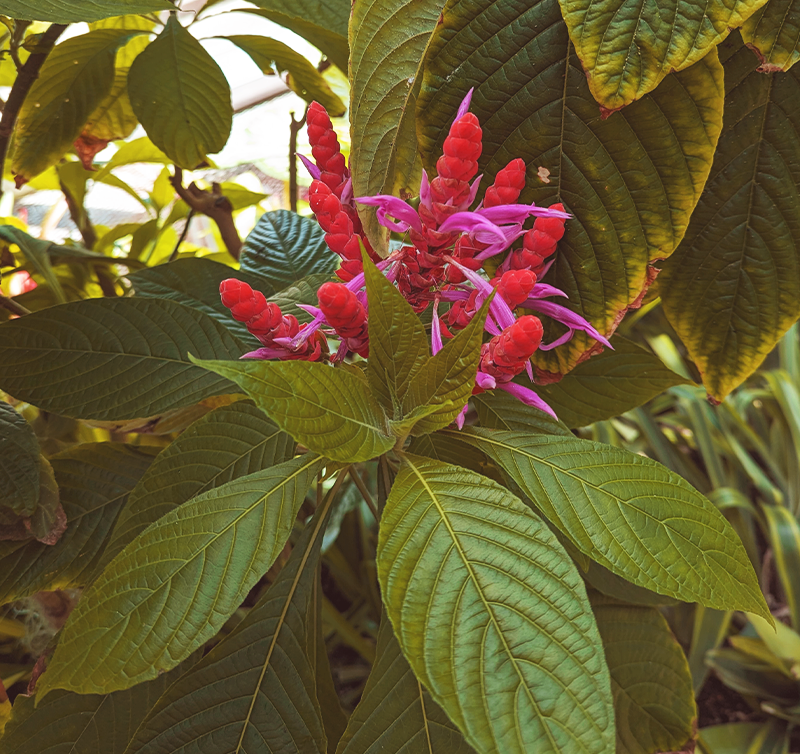
Large, glossy, oval-to-elliptic leaves with pronounced, depressed veins that give a subtly “corrugated” look—exactly the kind of leaf that makes a flowering spike feel even more theatrical.
The show is the inflorescence: upright spikes with colorful bracts (often orange-red to coral) and tubular flowers that open in shades of pink through red. The combination reads like warm “ember” bracts with a cooler pink flare pushing out from between them.
The flowers/bracts are well-known for attracting pollinators in suitable climates, especially butterflies and hummingbirds.
Native to the lowland tropics of Central America—commonly reported from Panama, Costa Rica, Nicaragua, and Honduras—and widely cultivated in warm regions elsewhere.
Best in bright, indirect light or semi-shade—think rainforest understory conditions. Too much direct sun can scorch leaves; too little light reduces vigor and flowering.
Prefers consistent moisture: water regularly so the mix stays slightly moist, but never swampy. Good drainage matters—this plant resents “wet feet.”
Treat it as a true tropical: warm temperatures and higher humidity produce the best growth and cleanest leaves.
Use a rich, well-draining mix—often a peat-based medium amended for drainage (perlite/bark-style structure works well).
It can be maintained as a 3–4 ft ornamental by trimming after flowering or as needed for shape. Pruning also helps encourage branching and more flowering points over time.
Most commonly propagated by stem cuttings (especially softwood/semi-hardwood cuttings in warm, humid conditions). Keeping cuttings warm and evenly moist speeds rooting and reduces failure from rot. (General horticultural practice for shrubby tropical ornamentals; specific sources vary.)
In cultivation, watch for common greenhouse/houseplant pests such as aphids, spider mites, and mealybugs, plus fungal issues like Botrytis (gray mold) when airflow is poor and foliage stays wet. Root problems usually trace back to waterlogged soil.