
Kingdom: Animalia
Phylum: Chordata
Class: Mammalia
Order: Cingulata
Family: Dasypodidae
Genus: Dasypus
Species: Dasypus novemcinctus
North America: Nine-banded armadillo
United States (Southern): Armadillo
Latin America: Armadillo de nueve bandas
Scientific Community: Dasypus novemcinctus
Size & Build:
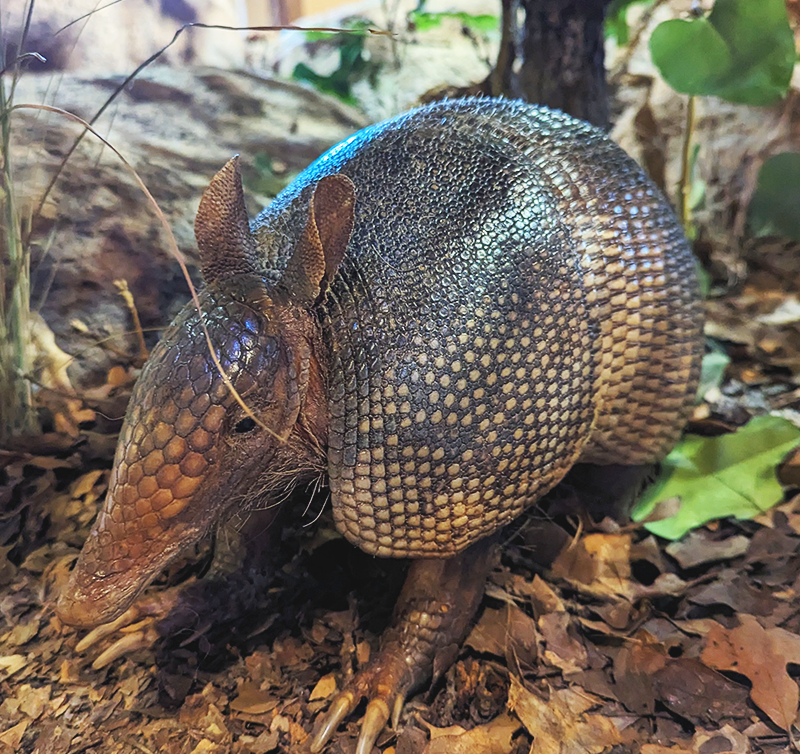
Medium-sized armored mammal with an elongated body, narrow head, and a long, tapered tail. Adults typically measure 60–80 cm (24–31 in) in body length, with an additional 30–40 cm (12–16 in) tail length. Average weight ranges from 4–7 kg (9–15 lb).
Armor & Coloration:
Covered in a tough carapace composed of bony plates (osteoderms) overlaid with keratinized scales. The characteristic nine flexible bands across the midsection allow limited bending and movement. Coloration ranges from gray-brown to yellowish-brown, often blending seamlessly with leaf litter and soil.
Limbs & Adaptations:
Strong forelimbs with large, curved claws adapted for digging. Poor eyesight is offset by an acute sense of smell, which is used to locate insects underground.
Behavior:
Primarily nocturnal or crepuscular. Solitary for most of the year, except during breeding season. Known for sudden vertical jumps when startled, a defensive reflex that can be hazardous near roadways.
Native Range:
Central and South America, with historical origins likely in tropical regions.
Expanded Range:
Now widespread across the southeastern and south-central United States, with a continuing northward expansion into the Midwest and lower Great Lakes region.
Preferred Habitat:
Woodlands, riparian corridors, grasslands, scrub, and semi-open agricultural landscapes. Frequently found near water sources but not dependent on aquatic habitats.
Shelter:
Constructs burrows in loose, well-drained soils. Burrows may be reused or abandoned and often provide shelter for other species.
Reproductive Strategy:
Exhibits obligate polyembryony—a rare reproductive trait among mammals. A single fertilized egg splits to produce four genetically identical offspring.
Breeding Season:
Mating typically occurs in summer, with delayed implantation resulting in births the following spring.
Offspring:
Usually four young per litter. Juveniles remain with the mother for several months before dispersing.
Natural Threats:
Predation by coyotes, bobcats, large birds of prey, and domestic dogs.
Human-Related Threats:
Road mortality is a major cause of death due to poor visual awareness and startle behavior. Habitat fragmentation and severe cold events can limit local populations.
Disease Considerations:
Known carrier of Mycobacterium leprae (leprosy), though transmission to humans is rare and primarily associated with direct handling.
Climate-Driven Range Expansion:
The nine-banded armadillo is a notable example of climate-influenced migration in North America. Historically limited by cold temperatures and hard freezes, the species has steadily expanded northward over the past century as winters have become milder. This expansion is not driven by active long-distance migration, but by gradual generational range creep, with populations establishing wherever winter soil temperatures remain above freezing long enough to support insect prey.
Extreme cold remains a limiting factor; armadillos lack dense fur and have low metabolic cold tolerance. Severe winters can cause rapid local die-offs, effectively setting temporary northern boundaries. As a result, the species’ range fluctuates year to year, closely tracking regional climate trends.
Ecological Role:
Acts as a soil disturber through foraging and burrowing, aerating soil and influencing invertebrate populations. Abandoned burrows provide habitat for reptiles, amphibians, small mammals, and invertebrates.
Cultural Notes:
Often viewed as a symbol of the American South, the armadillo’s expanding presence has made it an informal indicator species for warming regional climates.
In managed landscapes, coexistence is typically preferable to removal. While burrowing can disturb lawns or gardens, the species provides pest control benefits by consuming insects and grubs. Exclusion fencing and habitat modification are the most effective non-lethal management strategies.