
Kingdom: Plantae
Clade: Tracheophytes
Clade: Angiosperms
Clade: Eudicots
Clade: Asterids
Order: Asterales
Family: Asteraceae
Genus: Ageratum
Species: Ageratum houstonianum (most common ornamental species)
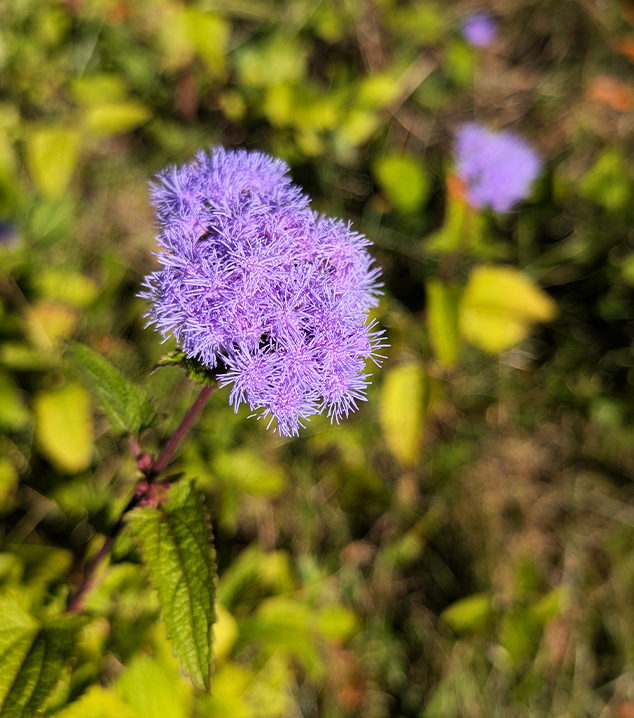
Compact, bushy annual forming dense mounds of soft, tufted flower clusters. Well suited to mass plantings and container culture.
Typically grows 6–12 inches (15–30 cm) tall, spreading 6–18 inches depending on cultivar and growing conditions.
Native to Central America and parts of Mexico.
Widely grown across North America as a bedding annual. Common in:
Not considered invasive in northern climates due to frost sensitivity.
Prefers full sun to partial shade. Strongest flowering occurs in full sun.
Moderate water requirements. Performs best in consistently moist, well-drained soil. Mulching helps retain moisture during hot periods.
Adaptable, but thrives in rich, well-draining soil with a neutral to slightly acidic pH.
Tolerates moderate to high humidity. Dense plantings may require airflow to prevent disease.
Primarily grown from seed.
Generally resilient.
Low maintenance.
At the Cernunnos Foundation, plant profiles are treated as more than ornamental guides. They are records of how living systems behave when placed into human-designed environments.
Ageratum is a useful reminder that resilience does not require complexity. It thrives because it is well-matched to its conditions, offers consistent output, and asks little in return.
In a time when many systems are over-optimized and under-designed for durability, even a modest bedding annual can illustrate a broader principle:
Design for stability.
Value reliability.
Work with systems, not against them.
These lessons apply as much to gardens as they do to the larger ecological and civic systems we depend on every day.