
Kingdom: Animalia
Phylum: Chordata
Class: Aves
Order: Accipitriformes
Family: Accipitridae
Genus: Gyps
Species: Gyps rueppelli
Rüppell’s Griffon Vulture
Rüppell’s Vulture
Rüppell’s Griffon
African Cliff Vulture
The species honors Eduard Rüppell, a 19th-century German explorer and naturalist who documented many African species during early scientific expeditions.
The Rüppell’s Griffon Vulture is one of the most powerful soaring scavengers in Africa and among the largest members of the Gyps vulture group.
Adults typically reach:
Length: 85–100 cm (33–39 in)
Wingspan: 2.2–2.6 m (7–8.5 ft)
Weight: 6–9 kg (13–20 lb)
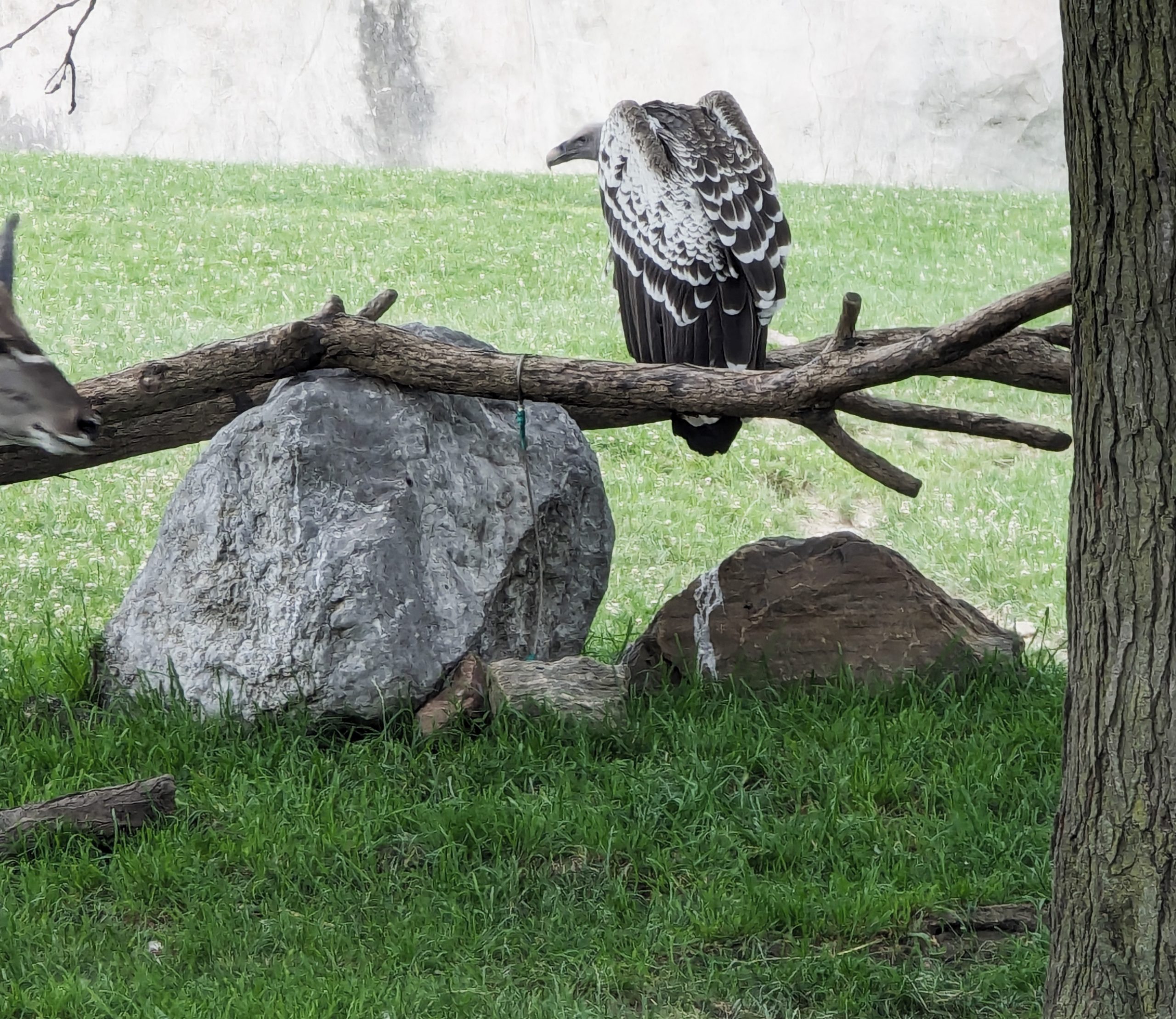
The bird’s plumage gives it a distinctive scaled appearance, formed by pale feather edges on darker brown feathers. When perched, this produces the striking scalloped pattern clearly visible in the photographs.
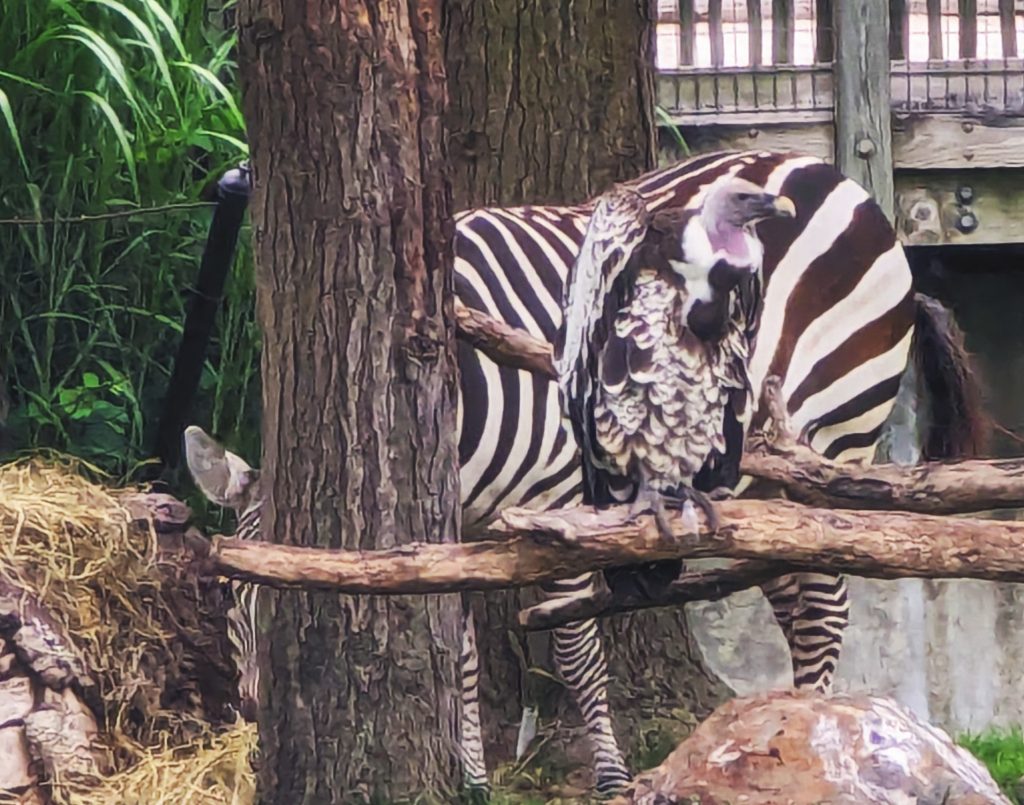
The head is mostly bare and grayish, surrounded by a prominent white feather ruff at the base of the neck. Like most vultures, the bare head helps prevent contamination when feeding inside carcasses.
The bill is heavy and sharply hooked, adapted for tearing hide and muscle from large carcasses. Wings are extremely broad, built for thermal soaring over enormous distances.
Rüppell’s griffon vultures inhabit much of sub-Saharan Africa, particularly across:
The Sahel
East African savannas
The Ethiopian Highlands
Kenya and Tanzania
Sudan and Chad
They are strongly associated with cliff systems and escarpments, where they build nests and take advantage of rising air currents.
Occasionally individuals appear far outside their normal range. In recent years, several birds have been documented in southern Europe after joining migrating flocks of Eurasian griffon vultures.
Natural habitats include:
Open savanna
Semi-arid grassland
Mountain escarpments
Cliff systems overlooking plains
These environments provide the strong thermal air currents necessary for efficient soaring.
Rüppell’s vultures can travel hundreds of kilometers in a single day while searching for carrion.
In zoological settings, they are typically kept in large aviaries or mixed savanna exhibits alongside African ungulates such as:
zebra
antelope
kudu
This arrangement mirrors the ecological relationships observed in the wild.
Rüppell’s vultures are colonial breeders, nesting in large cliff colonies that may contain hundreds of pairs.
Typical reproductive characteristics include:
Nest: platform of sticks built on cliff ledges
Eggs: usually one egg per breeding season
Incubation: approximately 55 days
Fledging: about 150 days after hatching
Both parents share incubation and feeding duties.
The slow reproductive rate makes the species particularly vulnerable to population decline, since replacement of lost adults occurs very slowly.
Rüppell’s griffon vultures are currently classified as Critically Endangered.
Across many regions of Africa, populations have collapsed dramatically over the past several decades.
Major threats include:
Poisoning from predator control programs
Poisoned livestock carcasses
Veterinary drug contamination
Habitat loss
Illegal wildlife trade
Electrocution on power infrastructure
Poisoning represents the greatest threat. In some cases a single poisoned carcass intended for predators can kill dozens or even hundreds of vultures.
Because vultures gather quickly at carcasses, mass mortality events are unfortunately common.
Rüppell’s vultures hold one of the most astonishing records in the bird world.
They are believed to be the highest-flying birds on Earth.
One individual collided with a commercial airliner over West Africa at approximately 11,300 meters (37,000 feet) — nearly the cruising altitude of passenger jets.
This remarkable ability comes from their mastery of thermal air currents, allowing them to soar at extreme heights while scanning the landscape below.
Conservation efforts increasingly rely on coordinated international breeding programs.
Several major zoological institutions participate in managed breeding networks such as the European Endangered Species Programme (EEP) and similar programs in North America.
These programs aim to:
Maintain genetic diversity
Establish insurance populations
Support potential future reintroduction programs
Educate the public about vulture conservation
Captive populations also allow researchers to study:
breeding behavior
chick survival
toxin sensitivity
dietary requirements
Understanding these factors is essential for stabilizing wild populations.
The photographs accompanying this profile capture an instructive ecological moment.
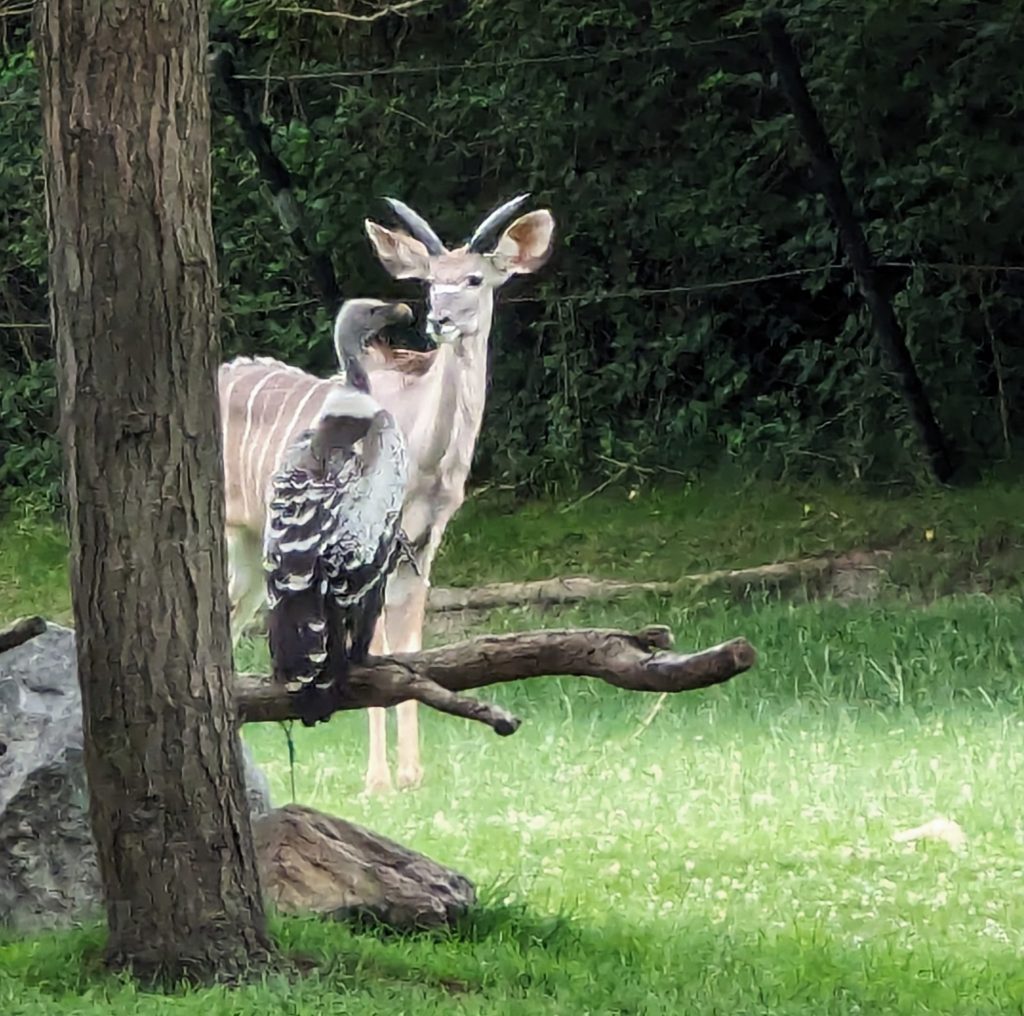
The primary image shows a Rüppell’s griffon vulture perched calmly on a branch within a mixed African savanna exhibit. Two additional images show the bird in proximity to zebra and kudu, both typical grazing species of African plains.
This relationship reflects a natural ecological pattern.
In the wild, vultures frequently follow large herbivore herds across open landscapes. While the vultures do not prey upon these animals, the movement of large herds increases the likelihood that a carcass may appear due to predation, illness, or injury.
Herbivores often remain aware of nearby vultures.
Although the birds themselves pose no threat, their presence can signal the activity of predators or the presence of death nearby. The alert posture of the kudu in the second image reflects this subtle awareness.
Another notable observation is the relaxed posture of the perched vulture. Vultures spend much of their day resting between flights, conserving energy for long soaring searches. Their wings and bodies are built for efficiency rather than constant motion.
When thermals develop during the day, these birds launch into the sky and may remain airborne for hours while scanning vast territories.
This combination of patience, efficiency, and extraordinary flight ability has made vultures among the most successful scavengers on Earth.
Yet ironically, this same ecological specialization now places them among the most threatened birds alive.
Their survival increasingly depends on human recognition of the essential role they play in maintaining healthy ecosystems.