
Kingdom: Animalia
Phylum: Chordata
Class: Amphibia
Order: Anura
Family: Bufonidae
Genus: Rhinella
Species: Rhinella alvarius
Binomial Name: Rhinella alvarius
Colorado River Toad
Sonoran Desert Toad
Sonoran Giant Toad
Desert Giant Toad
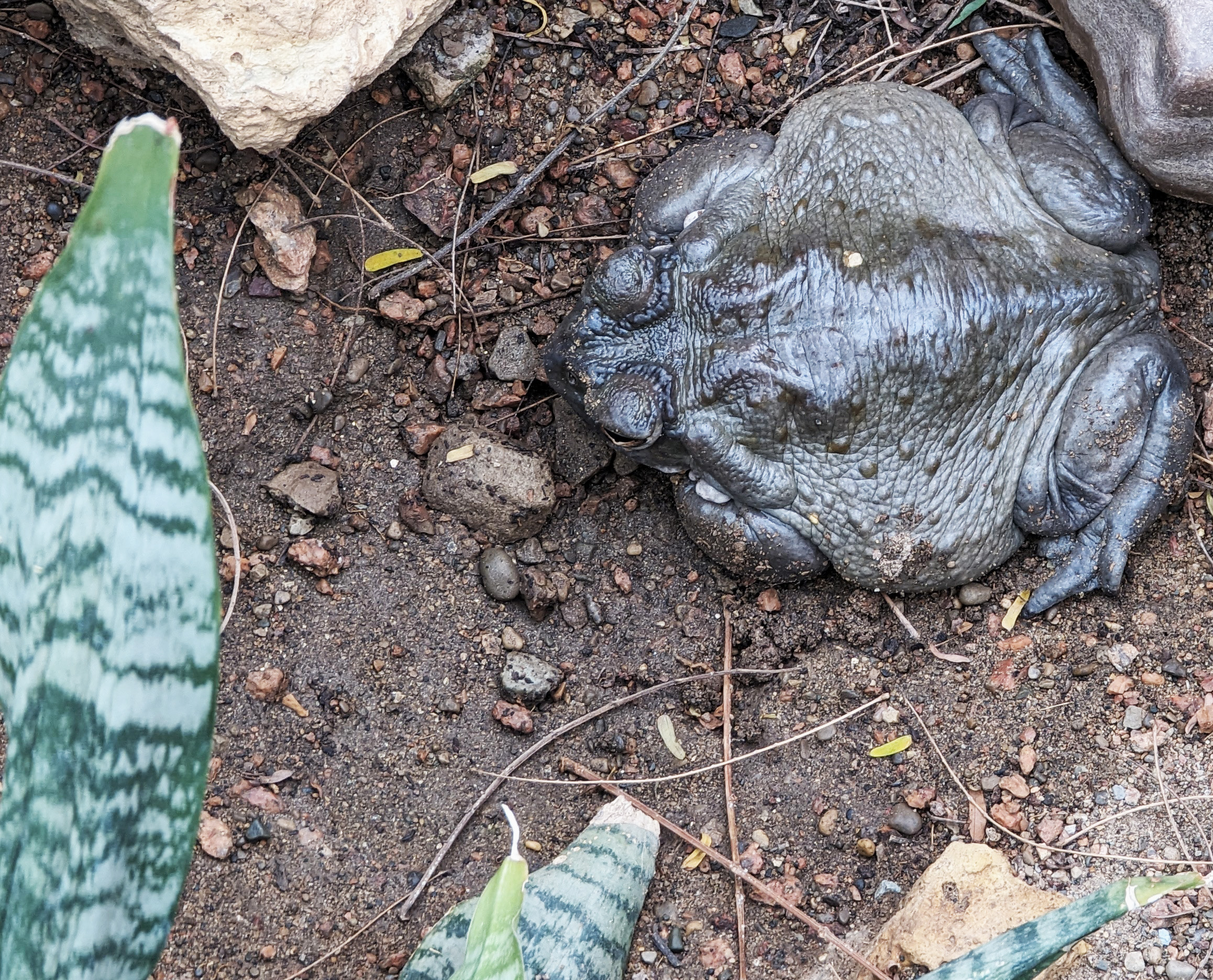
The Colorado River Toad is one of the largest native toads in North America. Adults possess a broad, flattened head and a thick, heavy body covered with coarse warty skin. Coloration is typically olive-green to dark brown with lighter patches along the underside.
The species is easily recognized by its large parotoid glands, located behind the eyes. These glands are prominent and kidney-shaped, producing potent defensive toxins when the animal is threatened.
Adults commonly reach 5–7 inches (13–18 cm) in length, with large individuals occasionally exceeding that range. The body is thick and muscular, giving the toad a rounded, powerful appearance when resting.
The skin is rough and warty, helping retain moisture and providing camouflage against desert soil and leaf litter. Unlike many other toads, this species often has a smoother underside.
The Colorado River Toad is native to the Sonoran Desert region of North America.
Its range includes:
Southern Arizona
Extreme southeastern California
Southwestern New Mexico
Northern Mexico, particularly the states of Sonora and Sinaloa
The species historically followed waterways associated with the Colorado River basin, though today it is found throughout suitable desert habitats across the region.
Colorado River Toads inhabit arid desert environments, but they remain closely tied to water sources.
Typical habitats include:
Desert washes
Floodplains
Irrigation canals
Oases and ponds
Agricultural fields
Suburban landscapes with water features
During the day they shelter underground in burrows or under rocks and vegetation to avoid extreme heat.
This species is primarily nocturnal, emerging after sunset to forage. Activity increases dramatically during the summer monsoon season, when rainfall triggers breeding and feeding behavior.
Breeding occurs during the summer monsoon rains, typically from June through September.
Males gather near temporary pools, ponds, and slow-moving streams, producing a low trilling call to attract females.
Females lay long gelatinous strings of eggs in shallow water. These eggs hatch quickly, and tadpoles develop rapidly to take advantage of temporary water sources before they evaporate.
Metamorphosis can occur within a few weeks depending on temperature and water availability.
Major threats include:
Habitat loss due to urban expansion
Road mortality during monsoon migrations
Predation by domestic animals
Water pollution and pesticide exposure
Like many amphibians, the species may also be vulnerable to chytrid fungal infections, which have affected amphibian populations worldwide.
The Colorado River Toad is famous for the powerful toxins produced in its parotoid glands. These secretions serve as a defense against predators and can be dangerous if ingested by pets or wildlife.
Despite its intimidating chemical defenses, the species plays an important ecological role as a predator of insects and other small animals, helping regulate desert invertebrate populations.
In desert ecosystems, amphibians such as this toad demonstrate the remarkable ability of life to persist in environments defined by extreme heat, drought, and seasonal rainfall.
When summer storms arrive, the desert briefly fills with movement and sound — and the Colorado River Toad emerges as one of the most impressive amphibians of the region.
Cernunnos Foundation Note:
The Colorado River Toad illustrates how desert ecosystems function through brief seasonal pulses of water and biological activity. Even in landscapes that appear dry and dormant for most of the year, complex ecological cycles unfold with remarkable speed and intensity when rain returns.