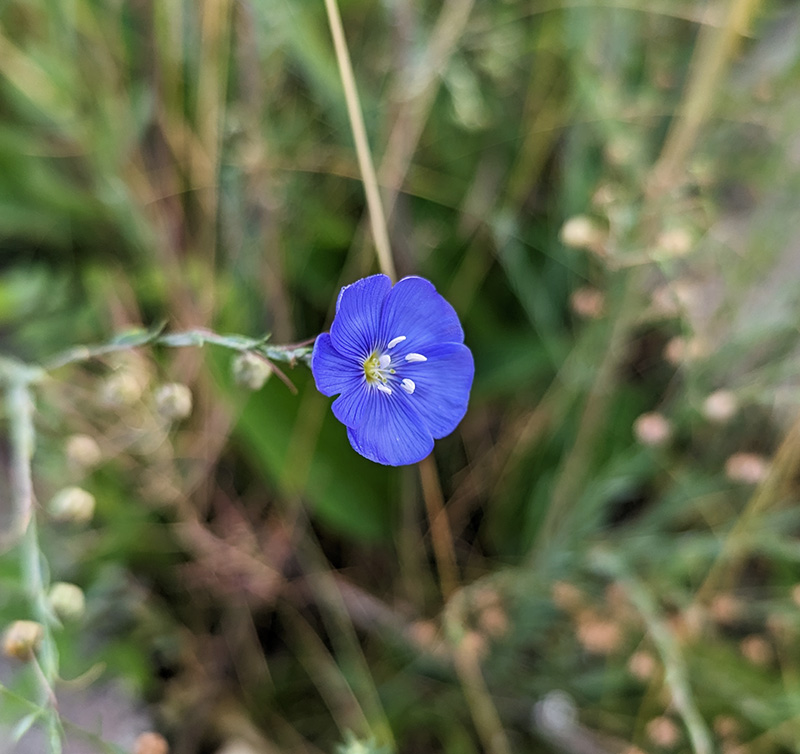
Perennial Flax
Taxonomy
- Kingdom: Plantae
- Clade: Angiosperms
- Clade: Eudicots
- Order: Malpighiales
- Family: Linaceae
- Genus: Linum
- Species: Linum perenne
Common Names by Region
- North America: Perennial flax, Blue flax (sometimes)
- Europe: Perennial flax
- Garden / horticulture trade: Blue flax, Perennial blue flax
Description
Quick ID
A delicate-looking but tough perennial with clear blue, five-petaled flowers and fine, grasslike leaves on slender stems. Blooms often open in sun and can be short-lived day-to-day, but the plant produces many flowers over its season.
Flower
- Color: Typically vivid sky-blue to violet-blue (occasionally lighter tones)
- Structure: 5 petals; subtle veining; pale center; prominent light stamens
- Behavior: Flowers may open best in bright light and close or fade quickly, replaced by new blooms
Leaves & Stem
- Leaves: Narrow, linear, sparse along the stems
- Stems: Thin, upright to lightly arching, often forming airy clumps
Growth Form
- Habit: Clump-forming perennial
- Overall look: “Wildflower-fine” texture with a single, crisp flower face that reads clearly even at a distance
Known Range
- Native range: Broadly across parts of Europe and western/central Asia (exact local nativity varies by region and classification).
- Introduced/used elsewhere: Widely planted and naturalized in some areas as an ornamental and meadow species.
Care / Habitat
Natural Habitat Tendencies
- Open grasslands, dry slopes, rocky or well-drained soils
- Prefers sun and airflow; does poorly in persistently wet soil
Garden Cultivation
- Light: Full sun (best flowering)
- Soil: Well-drained, lean-to-moderate fertility; sandy or gravelly soils are ideal
- Water: Moderate while establishing; drought-tolerant once established
- Spacing: Give it room for airflow; clumps expand gradually
Wildlife Value
- Attractive to pollinators (bees and other flower visitors) due to open, accessible floral structure.
Propagation / Reproduction
- Seed: Readily started from seed; direct sow or start in trays
- Division: Possible for established clumps (gentle handling)
- Self-seeding: Can occur in favorable sites, especially in well-drained meadow plantings
Pests / Diseases / Threats
- Generally low trouble when sited correctly
- Main risk: Root issues from poor drainage / overwatering
- Occasional foliar issues in humid, stagnant conditions—usually solved by sun and airflow
Additional Notes
- Do not confuse with cultivated flax (Linum usitatissimum), the classic fiber/seed flax; L. perenne is primarily ornamental/ecological planting.
- Best used where its fine texture and clean blue can read—meadow edges, rock gardens, dry borders, and “prairie-style” plantings.
Maintenance / Management
- Deadheading: Optional; can extend bloom appearance and reduce self-seeding
- Cutback: Light trim after flowering can tidy plants and encourage fresh growth
- Long-term: Avoid rich soil and over-fertilizing—this plant performs best lean and sunny
Post Views: 1,065