
Kingdom: Plantae
Clade: Tracheophytes
Clade: Angiosperms
Clade: Eudicots
Order: Nymphaeales
Family: Nymphaeaceae
Genus: Nymphaea
Species: Nymphaea odorata
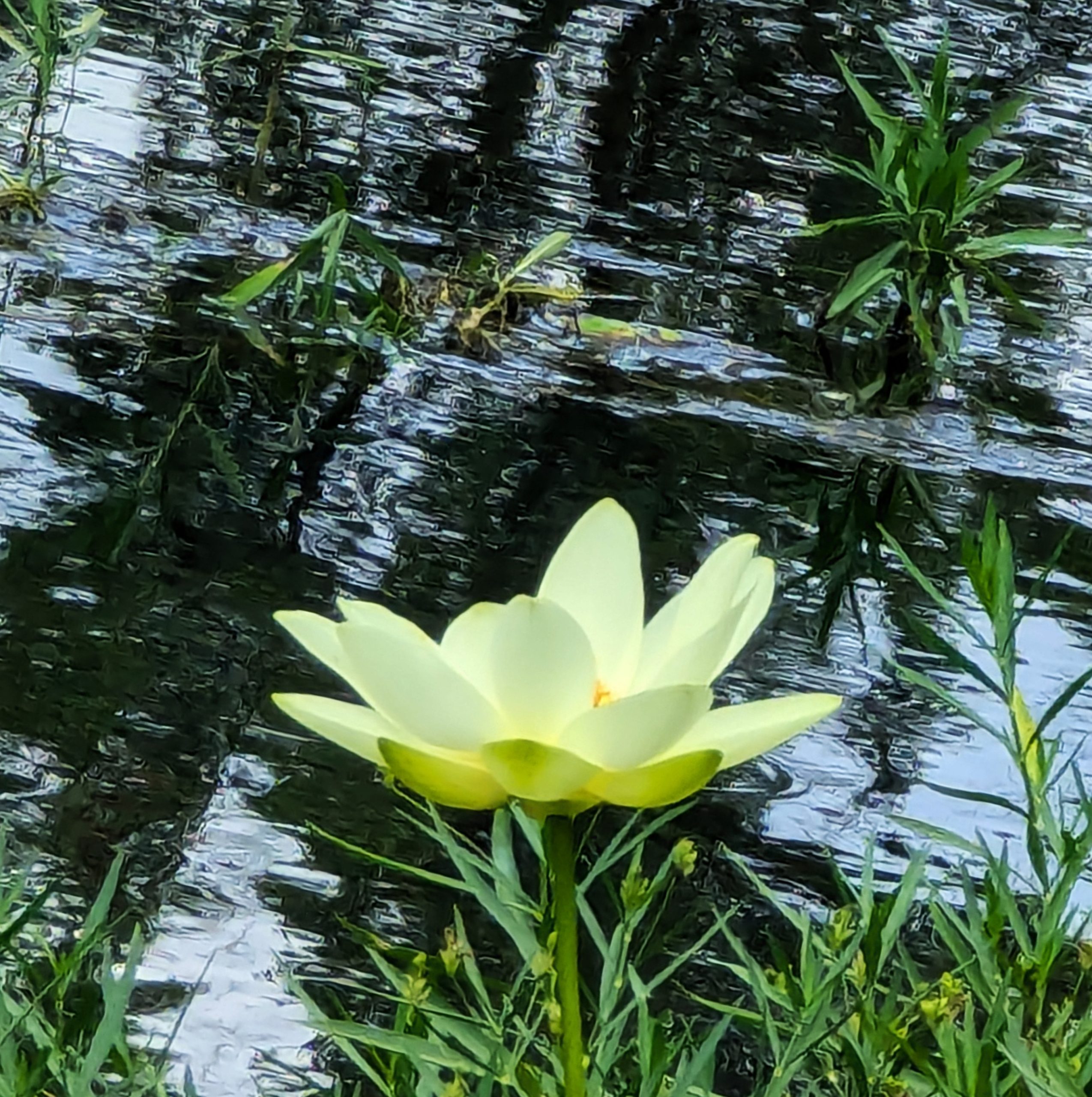
A perennial aquatic plant with floating leaves and showy white flowers that rise slightly above the water surface. The blossoms feature many pointed petals surrounding a yellow center and are often faintly fragrant.
Round, waxy floating pads with a distinct V-shaped notch extending toward the center. Leaves help shade the water and reduce surface heating.
Single blooms emerge on long stems from submerged rhizomes. Flowers open in daylight and often close later in the day. Petals are white to cream, sometimes slightly yellow at the base.
Rooted in mud with long flexible stems reaching the surface. Spreads gradually via rhizomes, forming colonies in quiet water.
Native to eastern and central North America. Common in ponds, marshes, lakeshores, and slow-moving waters throughout the Midwest and northeastern regions, including Indiana and Pennsylvania.
Often found in stable wetland systems, restored ponds, and natural depressional wetlands.
The American White Water Lily functions as both habitat and regulator within aquatic ecosystems. Its floating leaves moderate water temperature, provide shelter for fish and amphibians, and create microhabitats for insects and pollinators. Healthy populations often indicate relatively stable wetland conditions.