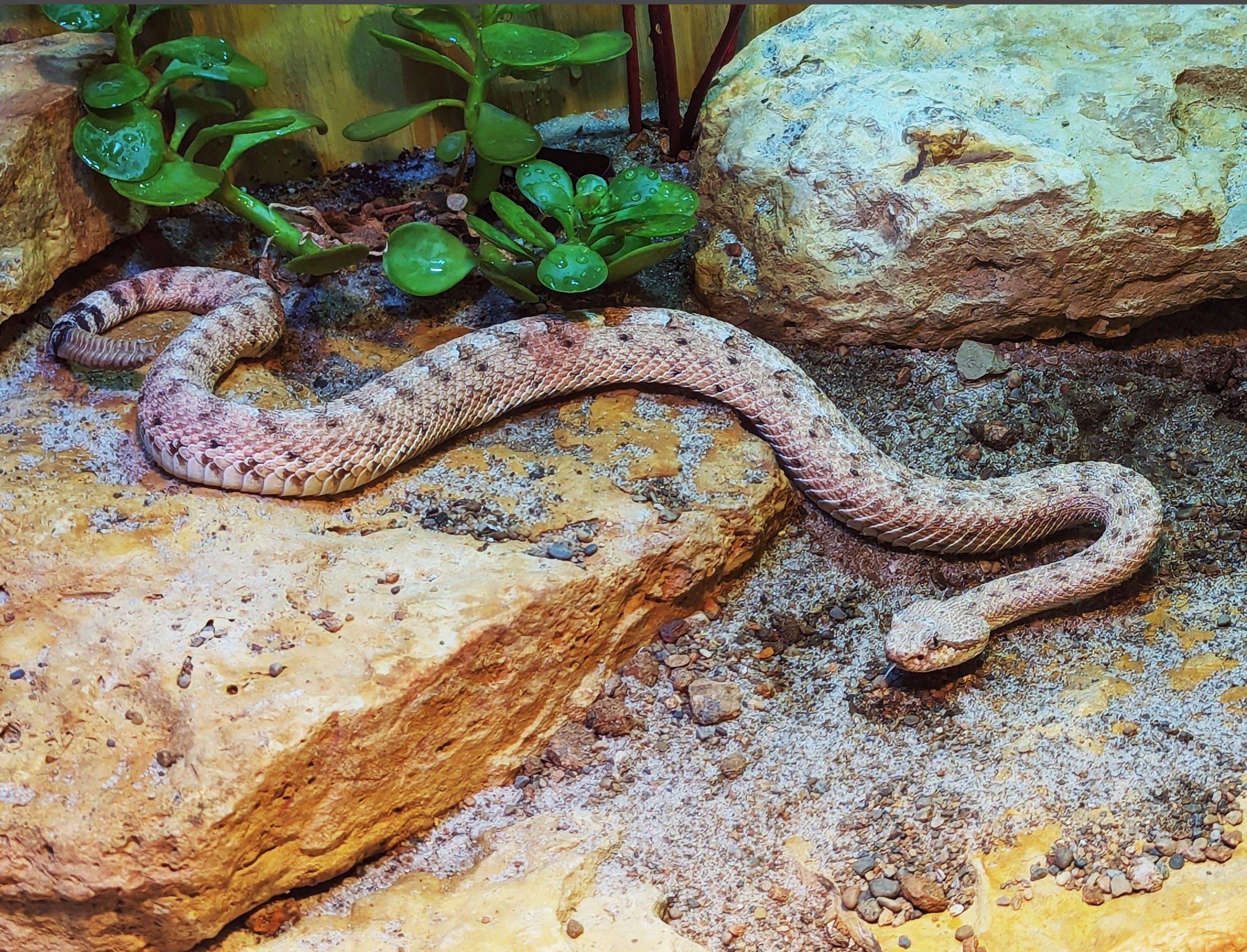
SIDEWINDER RATTLESNAKE
Taxonomy
- Domain: Eukaryota
- Kingdom: Animalia
- Phylum: Chordata
- Class: Reptilia
- Order: Squamata
- Suborder: Serpentes
- Family: Viperidae
- Subfamily: Crotalinae (pit vipers)
- Genus: Crotalus
- Species: Crotalus cerastes
Common Names by Region
- General (US/Mexico): Sidewinder, Sidewinder Rattlesnake
- Southwest US: Horned Rattlesnake, Desert Sidewinder
- Scientific/common grouping: North American pit viper (rattlesnake)
Description
Overview
The sidewinder is a small-to-medium rattlesnake built for sand. It’s famous for its sidewinding locomotion—a movement style that reduces sinking and limits body contact with scorching ground.
Key Identifiers
- Horn-like scales above the eyes (often obvious; helps in drifting sand).
- Pale desert coloration (tan, cream, pinkish-sand) with darker blotches/bands.
- Rattle at the tail tip (keratin segments).
- Short, stout viper build with a distinct, triangular head.
Behavior Notes
- Often nocturnal/crepuscular in hot months; may be more diurnal in cooler weather.
- Uses ambush tactics and may bury itself in sand with only eyes/horns exposed.
- Defensive posture can include coiling, buzzing the rattle, and striking if threatened.
Known Range
- United States: Primarily the Mojave and Sonoran desert regions (notably parts of CA, NV, AZ, UT)
- Mexico: Northern Baja California and adjacent desert areas (range varies by locality)
Care and Habitat
Wild Habitat
- Terrain: Sandy flats, dunes, desert scrub, washes, rocky-sand interfaces
- Shelter: Burrows, rodent tunnels, shrubs, rock edges
- Climate: Hot, arid; strong day-night temperature swings
Captive Notes (High-Level)
This species is venomous and dangerous. Captive care should only be undertaken by properly permitted, experienced keepers with secure, escape-proof enclosures and established safety protocols.
- Enclosure: Locking, secure, bite-proof access design (no free-hand servicing)
- Substrate: Deep, dry sand/sandy mix for burrowing and thermoregulation
- Thermal gradient: Warm basking zone + cooler retreat; nighttime drop typical of deserts
- Hides: Multiple hides; visual cover; stable rocks (cannot shift/collapse)
- Hydration: Clean water available; many individuals drink readily despite arid origin
- Feeding: Typically small mammals; feeding schedule depends on age/size and metabolism
Propagation and Reproduction
- Reproductive mode: Live-bearing (ovoviviparous)
- Seasonality: Mating commonly aligned with warmer seasons; timing varies by local climate
- Young: Born fully formed and venom-capable; disperse quickly in the wild
Pests, Diseases, Threats
Health Concerns (Wild/Captive)
- Respiratory issues from improper humidity/temperature management
- Mouth infections from injury or poor husbandry
- Parasites (more common in wild-caught or improperly quarantined animals)
Conservation/Threats
- Habitat loss and fragmentation (development, roads)
- Intentional killing due to fear/misidentification
- Collection pressure in some areas
- Road mortality, especially during warm evenings
Additional Notes
Human Safety
This is a venomous pit viper. Do not attempt to handle. If you encounter one in the wild, give it space and let it move on—most bites happen during harassment, capture attempts, or “relocation” without training. In the event of a bite: seek emergency medical care immediately.
Field Notes (from the photo)
- The animal is displayed on a sand-and-rock desert setup with sparse greenery—very consistent with sidewinder habitat aesthetics.
- Visible rattle segments and the overall sandy patterning strongly support Crotalus cerastes.
- Posture is relaxed/extended, suggesting it’s at rest rather than actively defending.
Open Use Notice (Educational + Artistic Reference)
Unless otherwise noted, the written material on Cernunnos Foundation is shared for open educational use and as artistic reference—students, makers, illustrators, and researchers are welcome to learn from it and build upon it.
- Please credit Cernunnos Foundation (and Robb Smith, when applicable) when you reuse or adapt this material.
- Do not present this as professional medical, veterinary, or legal advice.
- For venomous species specifically: this page is not a keeping guide—treat it as natural history and identification context, with safety first.
Post Views: 110