
Domain: Eukaryota
Kingdom: Animalia
Phylum: Chordata
Subphylum: Vertebrata
Infraphylum: Gnathostomata
Superclass: Osteichthyes
Class: Actinopterygii
Order: Cichliformes
Family: Cichlidae
Subfamily: Cichlinae
Tribe: Heroini
Genus: Hybrid lineage derived from Central American cichlids
Species: Artificial hybrid (no formal species designation)
Blood Parrot Cichlid
Parrot Cichlid
Blood Red Parrot
Red Parrotfish (aquarium trade usage)
Hybrid Parrot Cichlid
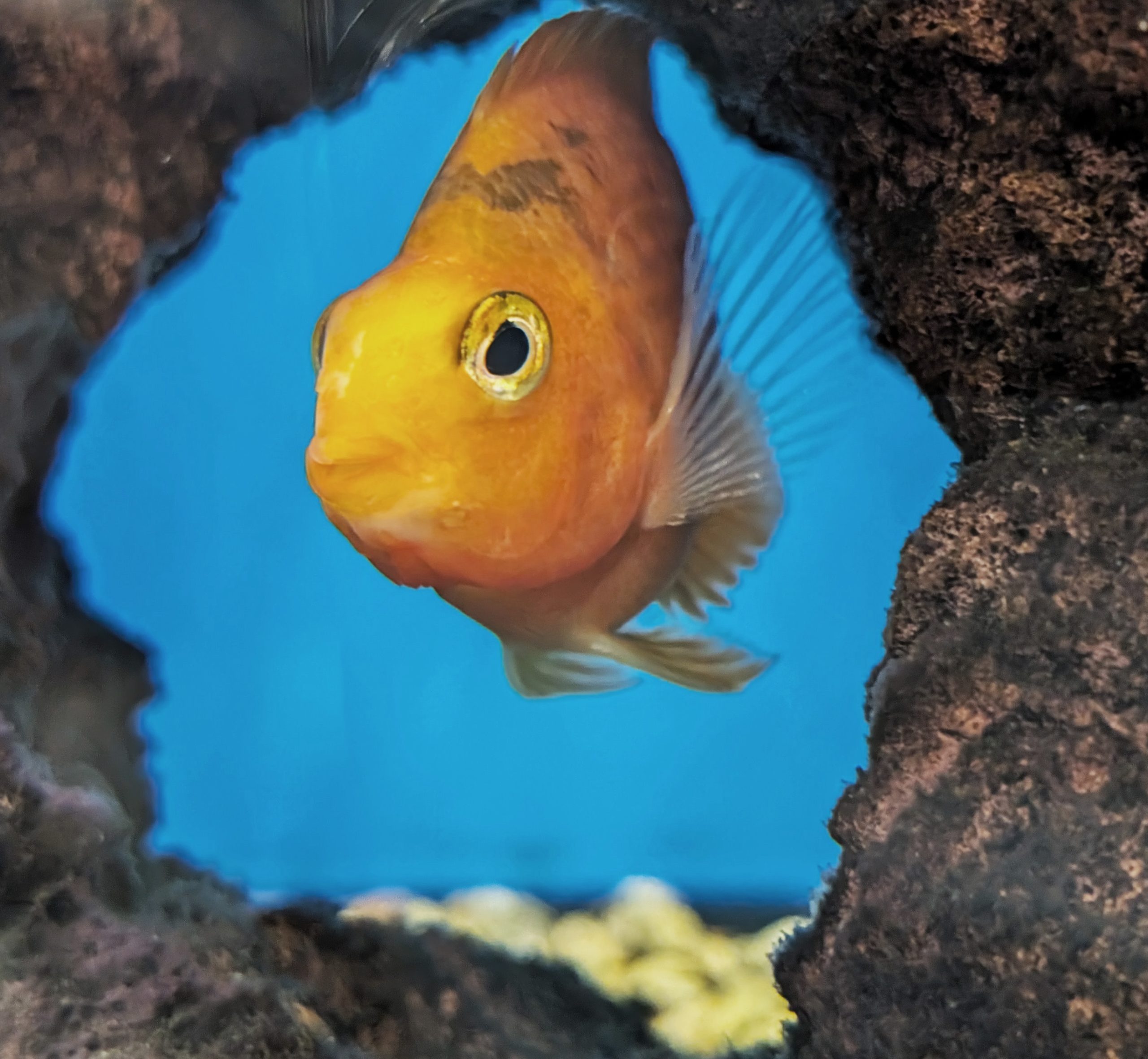
The Blood Parrot Cichlid is a brightly colored hybrid freshwater fish bred within the aquarium trade. The species is characterized by a rounded body, compact profile, and vivid orange to red coloration. The body appears somewhat balloon-shaped, with a steep forehead and shortened length relative to most naturally occurring cichlids.
The head is blunt and rounded. The mouth is small and beak-like, often remaining slightly open due to hybrid jaw structure. This feature gives the fish its distinctive “parrot” appearance and is the origin of its common name.
Most specimens display bright orange, red, or orange-yellow coloration. Some individuals exhibit darker mottled patches along the dorsal surface or flanks. The fins are typically translucent amber or smoky orange.
The dorsal and anal fins are elongated and curved, while the tail fin may be rounded or shortened depending on the breeding lineage. Swimming motion can appear somewhat slow or deliberate compared to many wild cichlids, though healthy individuals remain active and alert.
Blood Parrot Cichlids are known for their interactive temperament. Many individuals recognize feeding routines and react strongly to the presence of their caretaker. They frequently claim caves, rocks, or structures as territory and may guard these spaces from other fish.
This fish does not occur naturally in the wild. It is a hybrid developed within the ornamental fish industry and is maintained exclusively in captivity.
The species is commonly kept in aquariums worldwide, particularly in:
North America
Europe
East Asia
Southeast Asia
Australia
In aquaria the species prefers warm freshwater with stable conditions and moderate filtration.
Typical preferred conditions include:
Temperature: 76–82°F
Neutral to slightly alkaline water
Low to moderate current
Territory structures such as rocks, caves, or driftwood
Open swimming areas between structures
Blood Parrot Cichlids often establish a single cave or hollow as their primary territory.
Pair formation and spawning behavior can occur in captivity. Fish may clean surfaces, guard eggs, and defend nesting areas. However, because the Blood Parrot Cichlid is a hybrid, fertility varies widely.
Many males are sterile, and viable offspring are uncommon unless crossed with related cichlid species.
Most specimens in the aquarium trade originate from controlled hybrid breeding programs.
Common health risks include:
Ich and other freshwater parasites
Bacterial infections caused by poor water quality
Digestive issues related to inappropriate food
Stress from aggressive tankmates
Feeding difficulty caused by the mouth structure
Because the fish’s anatomy is the result of hybridization, some individuals may also experience swim bladder issues or other structural weaknesses.
The Blood Parrot Cichlid is among the most recognizable hybrid fish in the aquarium hobby. Its unusual appearance has made it both popular and controversial.
Supporters appreciate the fish’s vivid coloration, interactive behavior, and unique personality. Critics argue that its anatomical modifications—particularly the mouth shape—represent problematic breeding practices.
Despite these debates, the species can live long and healthy lives when kept under proper conditions. Well-maintained individuals often become the behavioral centerpiece of an aquarium, interacting visibly with people outside the tank.
Recommended care practices include:
Stable water parameters
High-quality filtration
Regular partial water changes
A varied diet of pellets, softened foods, and protein-rich items
Territory structures to reduce stress
Tankmates should be chosen carefully to avoid excessive aggression or competition during feeding.
With proper care, Blood Parrot Cichlids may live 10–15 years.
This profile is part of the Cernunnos Foundation Open Knowledge Archive.
All text may be freely used, quoted, reproduced, or expanded for educational and research purposes. The goal of this archive is to provide clear, accessible natural history information without restriction.
Knowledge grows when it is shared.
Copy it. Improve it. Build on it.