
Kingdom: Plantae
Clade: Angiosperms
Clade: Monocots
Order: Asparagales
Family: Iridaceae
Genus: Crocus
Species: Crocus tommasinianus
Woodland Crocus
Early Crocus
Tommasini’s Crocus
“Tommies” (common gardener nickname)
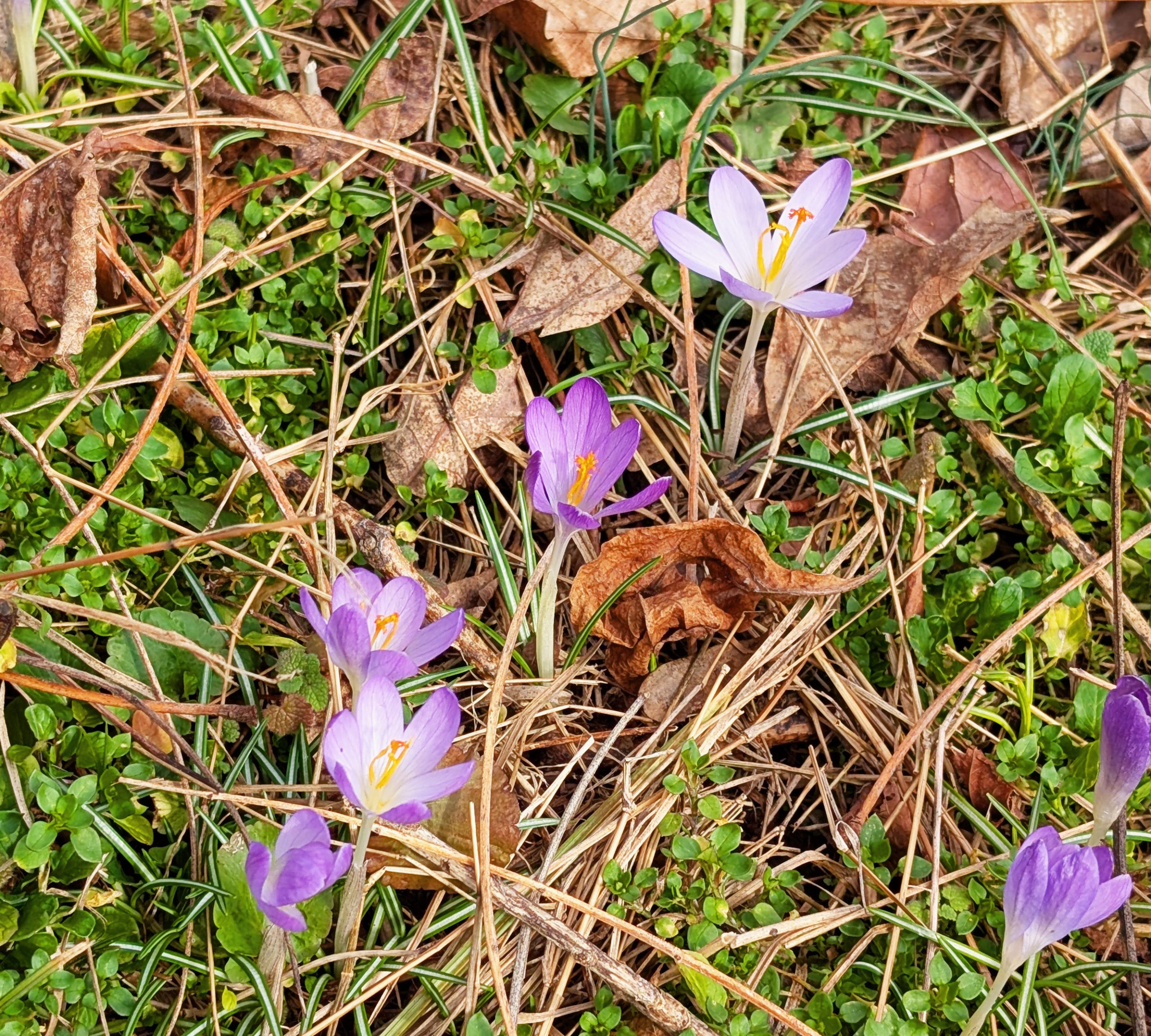
Crocus tommasinianus is a small perennial flowering plant that emerges from underground corms and blooms extremely early in the spring season.
The flowers are typically lavender to pale violet, sometimes nearly silvery in bright sunlight. Each bloom consists of six narrow tepals that open widely on sunny days and close again during cold or cloudy conditions.
Distinctive characteristics include:
Plants usually grow 3–5 inches (8–13 cm) tall.
Among crocus species, Crocus tommasinianus is particularly known for its ability to naturalize and form spreading colonies.
Native range:
Introduced and naturalized across:
In North America it is frequently found in:
Woodland crocus thrives in environments that mimic its native habitat:
Ideal settings include:
Because the plant completes its aboveground life cycle early in the season, it avoids competition from later-emerging plants.
Crocus tommasinianus spreads in two ways:
Corm Division
Underground corms divide and create small clusters of new plants over time.
Seed Production
Unlike many ornamental crocuses, Crocus tommasinianus readily produces seed and can spread naturally across landscapes.
This ability to reproduce by seed is one of the reasons it naturalizes so effectively.
Crocus plants are generally resilient but may be affected by:
Interestingly, Crocus tommasinianus is less attractive to squirrels than some other crocus species, which contributes to its persistence in naturalized plantings.
Woodland crocus is one of the earliest flowering plants in temperate landscapes, often blooming while frost still occurs overnight.
It provides an important early-season resource for pollinators, including:
Because it blooms so early, it occupies a seasonal niche where few other flowering plants are present.
Naturalized patches often persist for decades and can slowly expand through lawns and woodland margins.
Once established, woodland crocus requires almost no maintenance.
Recommended practices include:
Over time the plants will form naturalized drifts that return each year.
Naturalized plants such as Crocus tommasinianus offer subtle insights into landscape history. Their quiet persistence often marks the locations of former gardens, homesteads, or early ornamental plantings.
Each spring, these small flowers reappear long before most vegetation awakens, acting as one of the landscape’s earliest signals that the seasonal cycle has begun again.