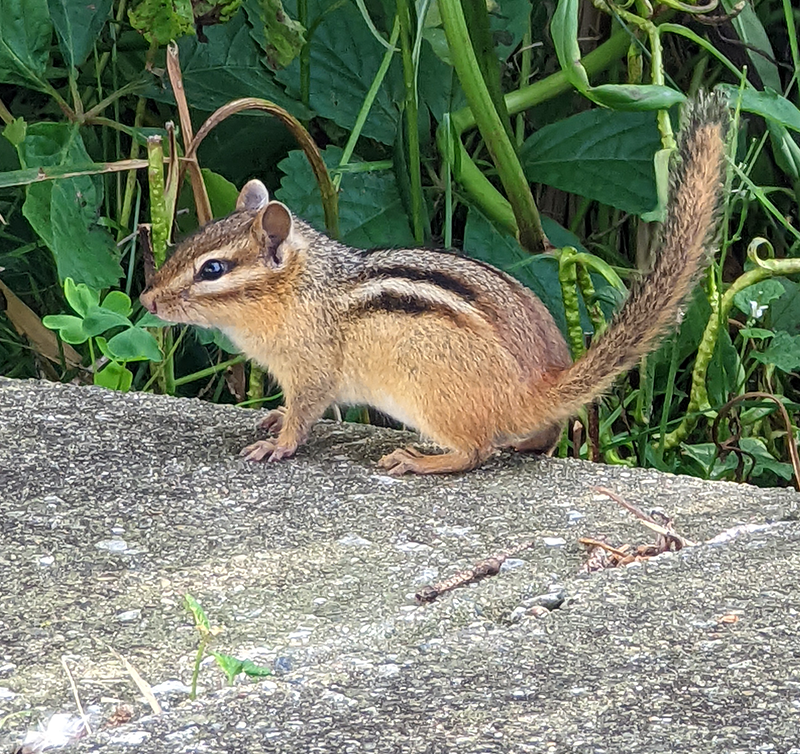
Tamias striatus
Taxonomy
- Kingdom: Animalia
- Phylum: Chordata
- Class: Mammalia
- Order: Rodentia
- Family: Sciuridae
- Subfamily: Xerinae
- Tribe: Marmotini
- Genus: Tamias
- Species: Tamias striatus
- Binomial Name: Tamias striatus
Common Names by Region
- Eastern Chipmunk
- Ground Chipmunk
- Striped Chipmunk
- Common Chipmunk
Description
General Appearance
A small, ground-dwelling squirrel with a compact body, short limbs, and a moderately bushy tail. This species is immediately identifiable by its distinct longitudinal striping.
Coloration & Markings
- Reddish-brown to tan body
- Five dark stripes along the back, separated by lighter bands
- Facial striping running through the eye
- Pale underside (cream to light gray)
The contrast in striping is especially sharp in your image—excellent condition, likely a healthy adult.
Size
- Length: ~8–10 inches (20–25 cm) including tail
- Weight: ~2–5 oz (55–140 g)
Tail & Posture
- Tail held upright or slightly arched when alert
- Quick, darting movements with frequent pauses
Known Range
- Eastern United States and southeastern Canada
- Extends westward into parts of the Midwest
- Common throughout Pennsylvania and the surrounding region
Highly adaptable to both woodlands and human-adjacent environments.
Care / Habitat
Preferred Habitat
- Deciduous forests
- Forest edges
- Stone walls, patios, and garden edges (as seen in your image)
- Areas with loose soil for burrowing
Behavior
- Diurnal (active during daylight)
- Solitary and territorial
- Frequently seen foraging and transporting food
Chipmunks are known for their cheek pouches, which they use to carry food back to burrows.
Propagation / Reproduction
- Breeding seasons: Early spring and mid-summer
- Gestation: ~30–31 days
- Litter size: Typically 2–6 young
Young are born blind and hairless, developing rapidly within underground burrows.
Pests / Diseases / Threats
Predators
- Hawks and owls
- Foxes and coyotes
- Domestic cats
Human Interaction
- Occasionally considered minor garden pests
- Can dig around foundations or landscaping
Environmental Pressures
- Habitat fragmentation
- Urban encroachment (though they adapt well)
Additional Notes
- Unlike tree squirrels, Eastern Chipmunks rely heavily on burrow systems rather than nests.
- Burrows can be extensive, with multiple chambers for food storage.
- They do not fully hibernate but enter periods of torpor, waking to feed on stored supplies.
Your image captures a foraging posture near edge habitat, a classic behavior zone where cover meets open ground—high awareness, ready to bolt.
Maintenance / Management
- Generally not managed unless populations become locally problematic
- Natural deterrence includes reducing accessible food sources
- Beneficial as part of ecosystem:
- Seed dispersal
- Soil aeration through burrowing
Post Views: 523