
Kingdom: Animalia
Phylum: Chordata
Class: Mammalia
Order: Perissodactyla
Family: Rhinocerotidae
Genus: Ceratotherium
Species: Ceratotherium simum
Subspecies: Ceratotherium simum simum
General / English: Southern White Rhinoceros, White Rhino
Southern Africa: White Rhinoceros
Afrikaans: Witrenoster
Scientific / Conservation Use: Ceratotherium simum simum
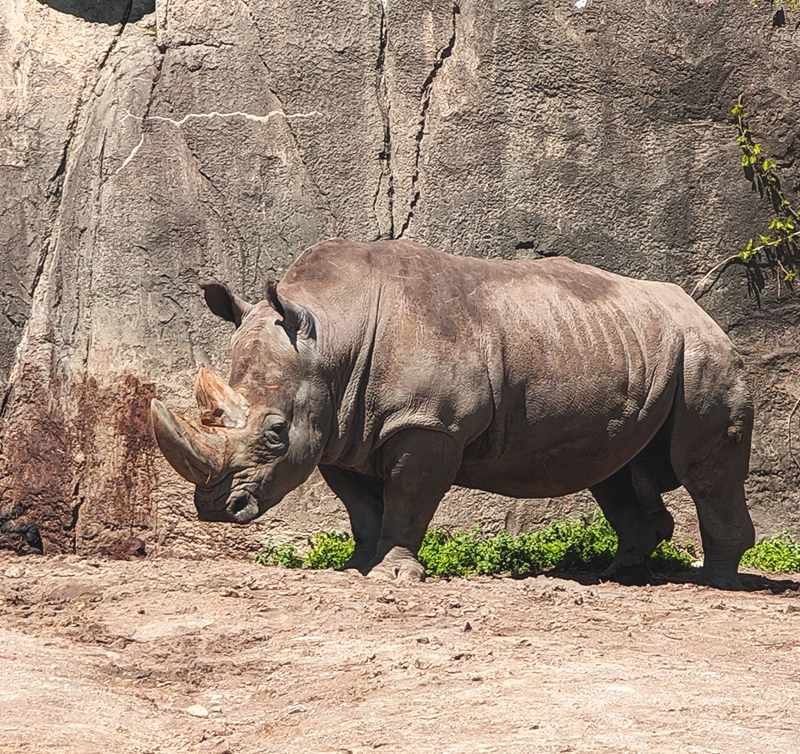
The southern white rhinoceros is the largest living rhinoceros species and one of the largest terrestrial mammals on Earth. Adults typically measure 3.4–4.2 m (11–13.8 ft) in body length, stand 1.5–1.9 m (5–6.2 ft) at the shoulder, and weigh between 1,800–2,500 kg (4,000–5,500 lb), with exceptional males exceeding these ranges.
The body is massive and barrel-shaped, supported by thick, pillar-like legs. The head is long and broad, held low to the ground, reflecting its specialized grazing lifestyle.
Two keratin horns are present on the snout:
Horns grow continuously and are composed of densely packed keratin fibers.
Skin is thick, gray to slate-colored, and sparsely haired. Despite the name “white,” the species is not white; the term derives from the Afrikaans wyd (“wide”), referring to the broad mouth.
Eyesight is limited, but hearing and smell are highly developed. Communication relies heavily on scent marking, dung middens, vocalizations, and body posture.
Originally widespread across southern and eastern Africa, including:
Now concentrated primarily in protected reserves and managed conservancies in southern Africa, with reintroduced populations in Kenya and Uganda. Smaller populations exist in accredited zoos and conservation breeding programs worldwide.
Prefers landscapes with abundant short grasses and access to permanent water.
Does not build shelters. Uses shade trees, wallows, and mud baths for cooling and parasite control. Maintains overlapping home ranges rather than exclusive territories.
Sexual reproduction with slow reproductive turnover.
Breeding occurs year-round, with peaks linked to rainfall and forage availability.
Approximately 15–16 months (≈480 days).
Adults face minimal natural predation.
Despite conservation success, renewed poaching since the 2000s has placed populations at renewed risk.
Susceptible to tuberculosis, anthrax, and parasitic infections, particularly in fragmented or stressed populations.
The southern white rhinoceros represents one of conservation’s greatest recovery stories. By the late 19th century, fewer than 100 individuals remained, primarily in South Africa’s Hluhluwe–iMfolozi region.
Intensive protection and managed breeding allowed the population to rebound to over 18,000 individuals by the early 21st century. However, poaching resurgence has since slowed and partially reversed this recovery.
As specialized grazers, white rhinos maintain short-grass “lawns” that benefit zebras, wildebeest, and other herbivores. Their grazing patterns shape savanna structure and nutrient cycling.
Their wallows and trails influence water flow and soil compaction.
The species is a global symbol of both conservation success and ongoing vulnerability. It demonstrates that megafauna can recover under sustained protection—but also how fragile those gains remain.
Modern conservation strategies include:
Accredited zoos and breeding centers participate in cooperative genetic management programs to preserve diversity and maintain insurance populations.
Facilities such as the Indianapolis Zoo contribute through breeding, research, and public education.
Sustained survival depends on continued funding, international cooperation, habitat preservation, and demand reduction for rhino horn.
Without these measures, even this “success story” remains at risk.