
Kingdom: Plantae
Clade: Tracheophytes
Clade: Angiosperms
Clade: Eudicots
Clade: Rosids
Order: Fabales
Family: Fabaceae
Subfamily: Caesalpinioideae
Genus: Chamaecrista
Species: Chamaecrista fasciculata
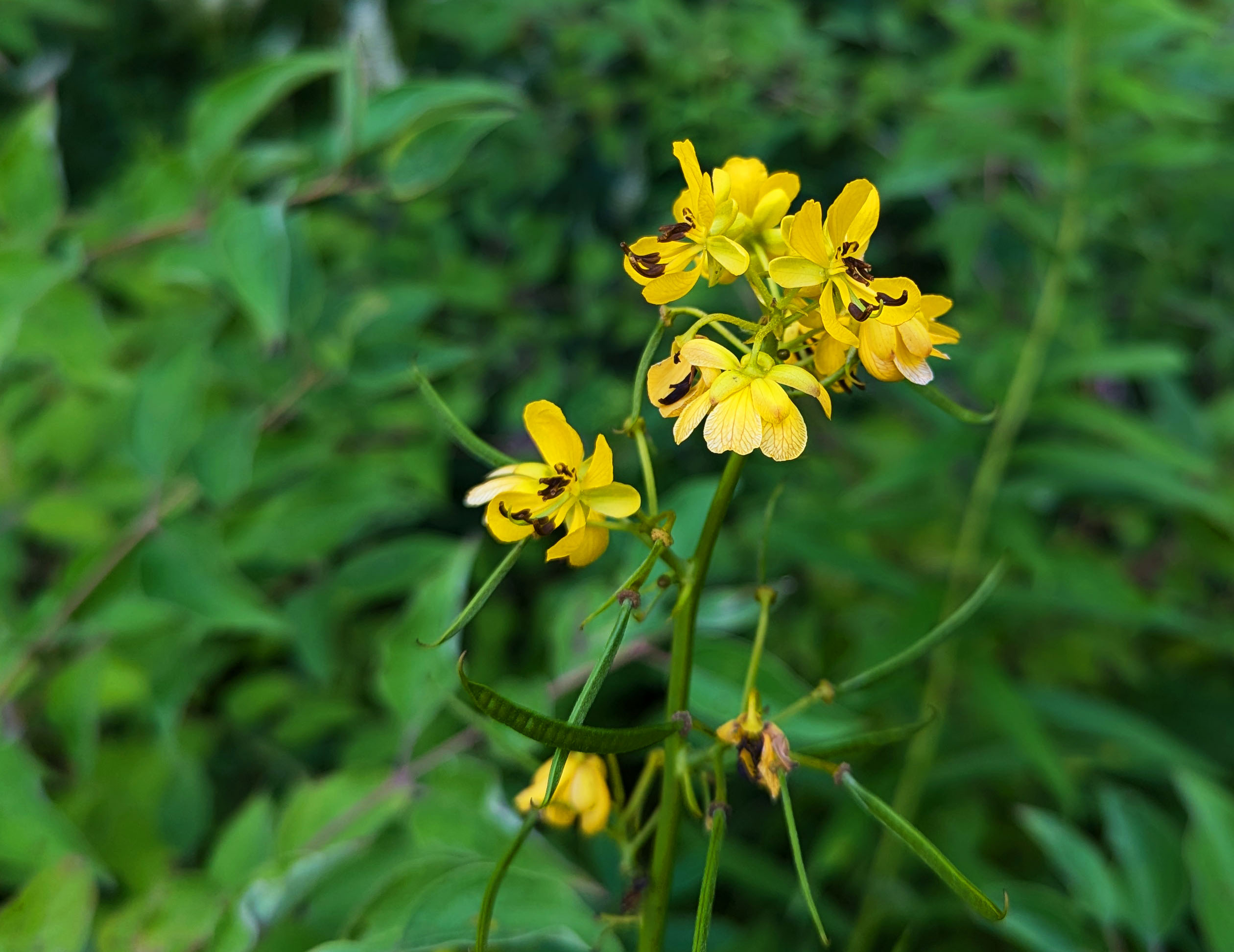
An upright native annual legume typically reaching 1–3 feet in height. Light, airy structure with branching stems and fine compound foliage.
Even-pinnate compound leaves composed of many narrow paired leaflets. Leaves may fold slightly under stress or at night.
Bright yellow, five-petaled flowers with prominent curved dark anthers. Blooms appear singly or in small clusters along the upper stems from midsummer into early fall.
Slender, bean-like seed pods that dry and twist open, ejecting seeds explosively when mature.
Native throughout eastern and central North America, including:
Common in:
Light: Full sun
Soil: Tolerates poor, sandy, or compacted soils
Moisture: Moderate to dry
pH: Broad tolerance
This species thrives in disturbed ground and is often used in prairie mixes and erosion control blends.
As a legume, it forms symbiotic relationships with nitrogen-fixing bacteria, improving soil fertility over time.
Because it is an annual, reseeding is essential for long-term presence.
Generally resilient.
In ecological design, partridge pea acts as a nitrogen-building annual bridge species before longer-lived perennials establish dominance.
This profile and associated imagery are provided for educational, ecological restoration, and artistic reference purposes.
The Cernunnos Foundation supports open access to biological knowledge to advance ecological literacy, regenerative design, and creative documentation.
Use freely. Learn deeply. Restore responsibly.