
Kingdom: Plantae
Clade: Tracheophytes
Clade: Angiosperms
Clade: Monocots
Order: Asparagales
Family: Orchidaceae
Subfamily: Cypripedioideae
Genus: Paphiopedilum
Species: Paphiopedilum glaucophyllum (reference parent species)
Form Observed: Paphiopedilum glaucophyllum–based hybrid
Lady’s Slipper Orchid
Asian Lady’s Slipper Orchid
Paphiopedilum Orchid
Slipper Orchid
This orchid belongs to the genus Paphiopedilum, a group known for their distinctive slipper-shaped flowers. The inflated pouch at the center of the bloom functions as a specialized pollination structure that temporarily traps visiting insects.
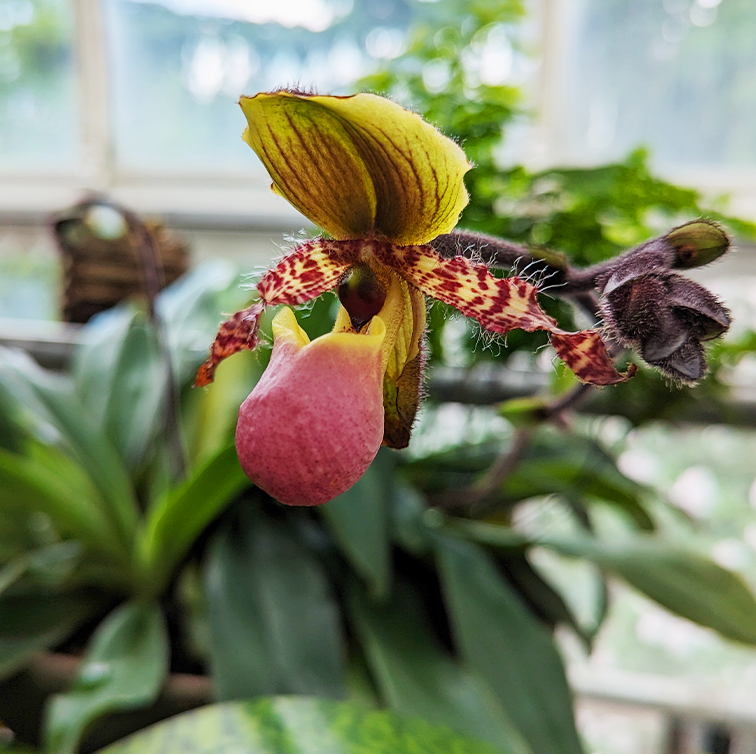
The photographed plant displays the characteristic pouch-like lip, a striped dorsal sepal, and hairy lateral petals, all defining traits of the genus.
The most distinctive feature is the inflated pink pouch, which resembles a small slipper. Above it rises a broad dorsal sepal marked with green and brown striping. The lateral petals extend outward and are covered in fine hairs and irregular spotting.
These structures work together to guide pollinating insects through the flower in a one-way path.
Leaves grow in a basal rosette and are thick, smooth, and strap-shaped. Many species and hybrids in this group have solid green foliage, though mottled leaves occur in other members of the genus.
Unlike many orchids that grow on trees, many Paphiopedilum species are terrestrial or lithophytic, growing in humus-rich forest soils or in cracks in limestone.
Plants typically produce one or several flowers per stem depending on species or hybrid lineage.
The species Paphiopedilum glaucophyllum is native to Southeast Asia, particularly:
Indonesia
Java
Surrounding tropical island regions
Hybrids derived from this species are now cultivated worldwide in:
Botanical gardens
Greenhouses
Private orchid collections
They are especially common in tropical plant conservatories.
In the wild, glaucophyllum-type orchids grow in warm, humid forest environments with filtered light. They often occur along shaded slopes or in limestone regions where organic debris accumulates.
In cultivation these orchids prefer:
Bright but indirect light
High humidity
Excellent drainage
Moist but not waterlogged growing media
Temperatures typical of tropical conservatories suit them well.
The pouch-shaped lip forms a temporary trap for insects, usually flies or small bees. Insects enter the pouch and are forced to exit through narrow passages that guide them past the pollen structures, ensuring pollination.
Propagation is typically achieved by:
Division of mature plants
Seed propagation in sterile laboratory conditions
Orchid seeds require fungal partners in nature and are extremely small.
Common issues include:
Root rot from excessive moisture
Fungal infections in poorly ventilated environments
Scale insects and mealybugs in greenhouse settings
Wild populations of many Paphiopedilum species face pressure from habitat loss and historical over-collection.
The genus name Paphiopedilum comes from:
Paphos — a sacred site associated with the goddess Aphrodite
Pedilon — Greek for sandal or slipper
The name refers directly to the flower’s distinctive pouch.
Lady’s slipper orchids are among the most recognizable members of the orchid family and represent one of the most specialized pollination systems in flowering plants.
Many cultivated forms are hybrids developed to enhance flower size, color contrast, and bloom longevity.