
Kingdom: Plantae
Clade: Tracheophytes
Clade: Angiosperms
Clade: Eudicots
Clade: Asterids
Order: Asterales
Family: Asteraceae
Genus: Coreopsis
Species: Coreopsis verticillata
Binomial Name: Coreopsis verticillata L.
Threadleaf Coreopsis
Threadleaf Tickseed
Whorled Tickseed
Fernleaf Coreopsis
Pot-of-Gold (some cultivars)
Zagreb Coreopsis (cultivar name widely used)
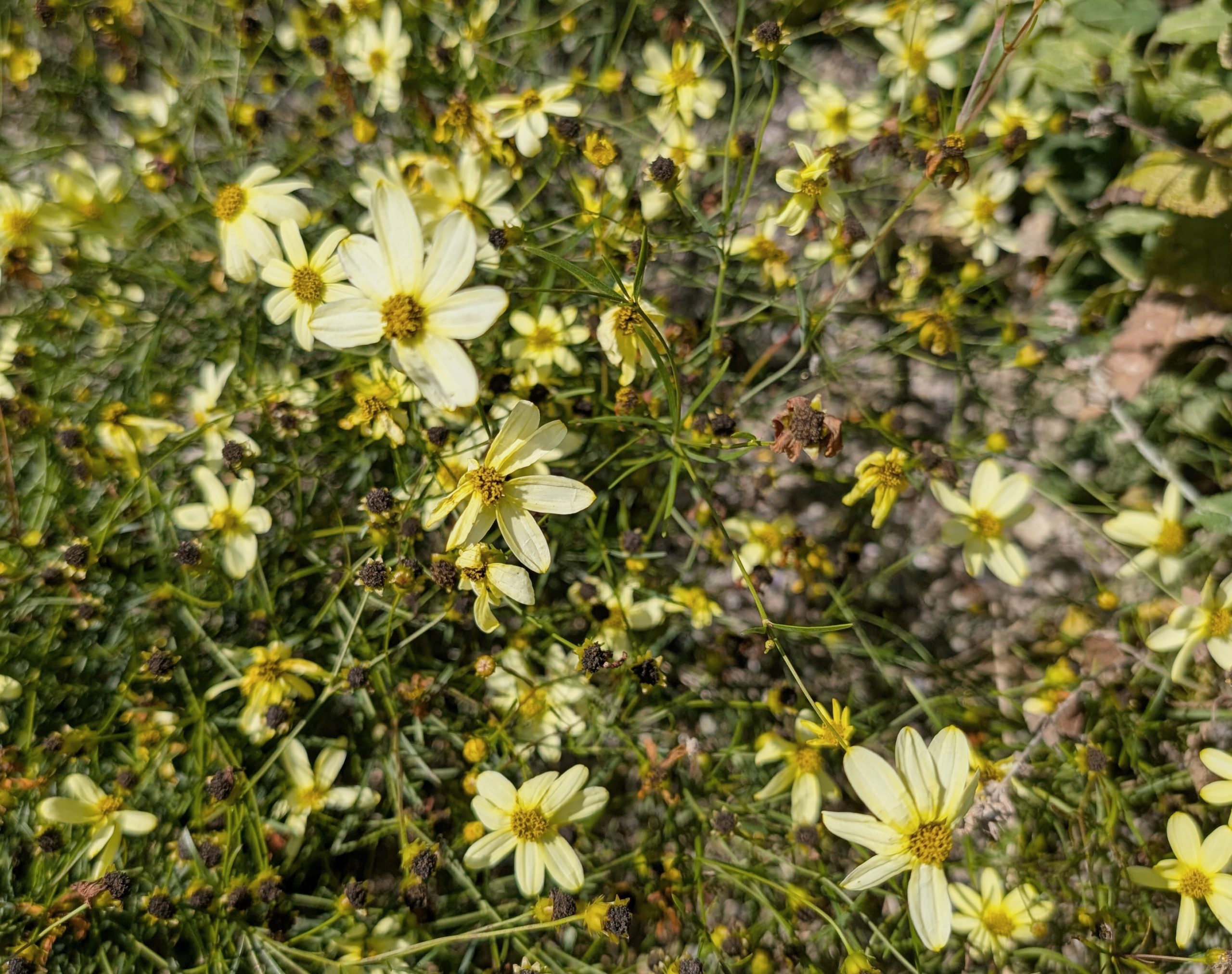
Threadleaf Coreopsis is a fine-textured perennial wildflower in the aster family (Asteraceae). It forms airy clumps with delicate foliage and numerous small yellow daisy-like flowers that appear to float above the plant.
The species is valued in naturalistic plantings and pollinator gardens because of its long bloom season, drought tolerance, and adaptability to poor soils.
Plants typically grow 1–3 feet tall and spread slowly through rhizomes, creating loose colonies over time.
Leaves are the defining feature of the species. They are extremely thin, threadlike, and finely divided, giving the plant a fernlike appearance. The leaves are arranged in whorls along the stem, which is reflected in the species name verticillata (meaning “whorled”).
Flowers resemble miniature daisies:
The flowers are held on thin, wiry stems that create a light, cloud-like bloom effect.
Bloom period typically runs early summer through late summer, often extending into early fall depending on climate.
The plant spreads through shallow rhizomes, forming loose clumps rather than aggressive colonies.
Threadleaf Coreopsis is native to eastern and central North America.
Natural range includes:
Eastern United States
Midwestern United States
Appalachian regions
Parts of the southeastern United States
It is now widely cultivated across North America and Europe in ornamental plantings and pollinator gardens.
Typical habitats include:
Open woodland edges
Prairies and meadow margins
Dry slopes
Disturbed fields
Roadside environments
Threadleaf Coreopsis thrives in conditions that mimic its native prairie and meadow habitats.
Preferred conditions include:
Full sun
Well-drained soils
Moderate to dry moisture conditions
Poor or sandy soils
The species tolerates:
Heat
Drought
Thin soils
Rocky ground
It does not perform well in heavy, poorly drained soils.
Because of its delicate foliage and long bloom season, it is commonly used in:
Pollinator gardens
Prairie restorations
Naturalized landscapes
Roadside plantings
Threadleaf Coreopsis reproduces through both seed production and rhizomatous spread.
Seeds are produced in small dry fruits known as achenes, typical of the Asteraceae family.
Propagation methods include:
Seed sowing (direct or stratified)
Division of established clumps
Rhizome spread
Seeds are often dispersed by wind and small animals.
The plant establishes quickly when grown from seed and may flower in the first or second growing season.
Threadleaf Coreopsis is generally resistant to most pests and diseases.
Occasional issues include:
Powdery mildew (in humid conditions)
Aphids
Leaf spot diseases
Most problems occur when plants are grown in overly moist or poorly ventilated environments.
Deer resistance is considered moderate to high, though browsing may occur in areas with heavy deer pressure.
Threadleaf Coreopsis is considered one of the best long-blooming native perennials for pollinator support.
The flowers attract:
Native bees
Honeybees
Butterflies
Hoverflies
Because of its extended flowering period, it serves as a reliable nectar source during mid-summer when other blooms begin to decline.
Numerous ornamental cultivars have been developed, including:
‘Zagreb’
‘Moonbeam’
‘Golden Showers’
‘Route 66’
These cultivars often feature improved flowering or compact growth habits but retain the ecological value of the species.
Maintenance requirements are minimal.
Recommended practices include:
Cutting plants back lightly after the first bloom to encourage rebloom
Dividing clumps every 3–4 years to maintain vigor
Allowing some seed heads to mature for wildlife benefit
Deadheading is optional but can extend the bloom period.
In naturalized settings, plants may be allowed to spread slowly to create informal drifts of color.