
Kingdom: Plantae
Clade: Tracheophytes
Clade: Angiosperms
Clade: Eudicots
Clade: Asterids
Order: Asterales
Family: Asteraceae
Genus: Zinnia
Species: Zinnia elegans
Garden Zinnia
Youth-and-Age
Common Zinnia
Elegant Zinnia
Zinnia elegans is an upright annual flowering plant native to Mexico but widely cultivated throughout the world. Plants typically grow 1–3 feet tall, forming branching stems that produce continuous blooms through the warm season.
The species is prized for its vibrant flower heads, drought tolerance, and ability to attract pollinators.
Leaves are opposite, ovate to lanceolate, and slightly rough to the touch. They attach directly to the stem without a petiole and form pairs along the upright green stems.
The flower heads are composite structures typical of the Asteraceae family, consisting of:
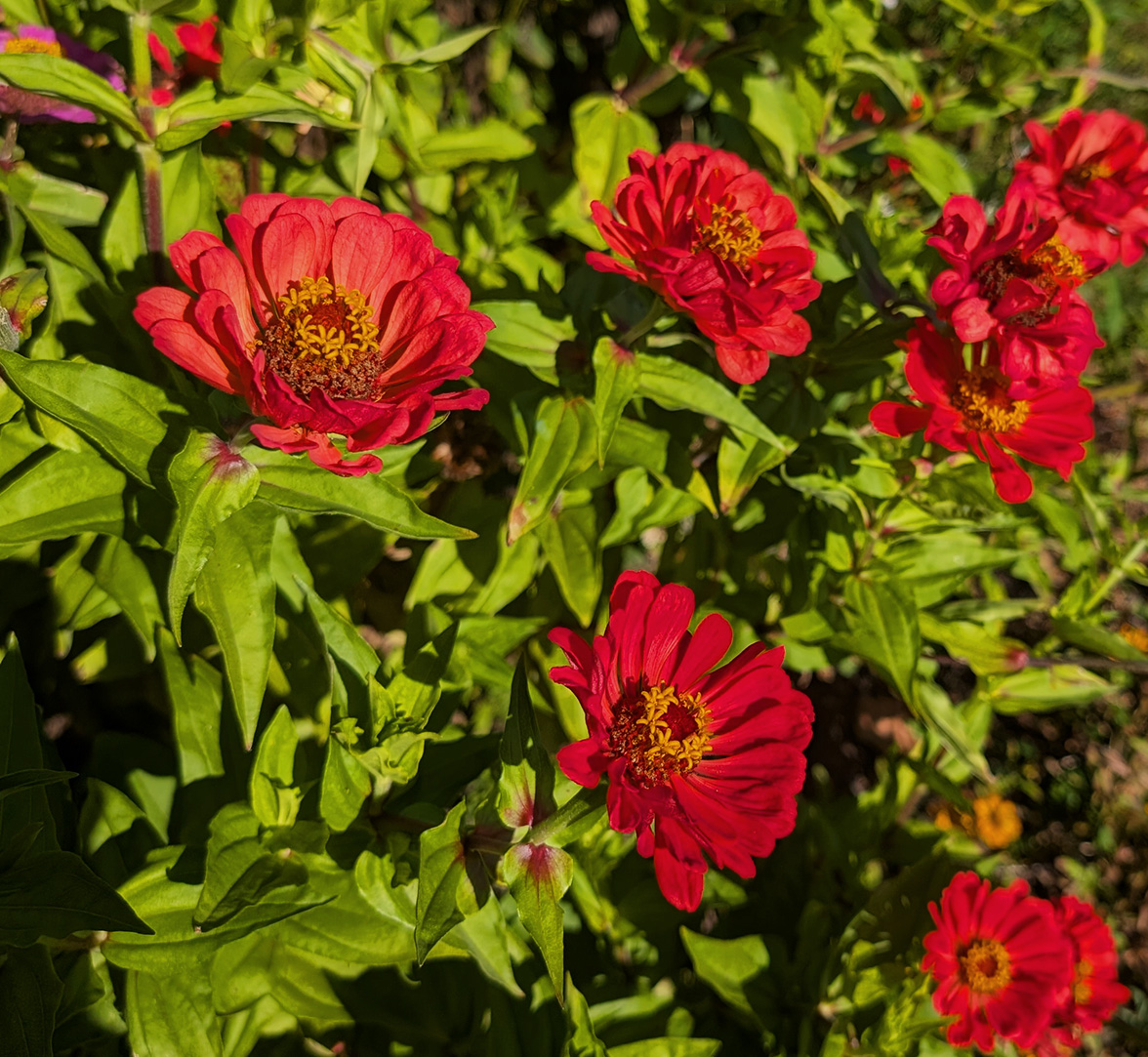
Cultivated varieties range from single to fully double blooms. The specimen shown here is a semi-double red cultivar, where the yellow disk florets remain visible while multiple rows of ray florets surround them.
Flower size commonly ranges 2–4 inches across.
Summer through early autumn, often continuing until frost.
Native Range: Mexico
Cultivated Range: Worldwide in temperate and subtropical regions.
In North America it is widely grown in gardens, urban plantings, and pollinator beds.
Zinnias thrive in full sun and warm temperatures.
Preferred conditions:
Sun: Full sun
Soil: Well-drained soil
Water: Moderate, drought tolerant once established
Spacing: Good airflow recommended to prevent fungal issues
They are commonly planted in:
Propagation occurs primarily through seed.
Seeds germinate quickly in warm soil, often within 5–7 days.
Zinnias readily reseed in favorable conditions and are frequently grown as direct-sown annuals.
Common issues include:
Powdery mildew
Leaf spot diseases
Aphids
Japanese beetles
Good spacing and airflow significantly reduce fungal disease pressure.
Zinnias are among the most valuable pollinator-support plants in ornamental gardens. Butterflies, bees, and other beneficial insects frequently visit the flowers for nectar and pollen.
Because they bloom continuously when deadheaded, they are also popular cut flowers.
The wide range of cultivars developed over the past century includes forms bred for:
Deadheading encourages continuous flowering.
Tall varieties may benefit from light staking in windy locations.
Seeds can be collected from mature dried flower heads at the end of the growing season.
All images and observational notes published by the Cernunnos Foundation are provided as open reference material for education, artistic study, and ecological documentation.
Artists, educators, and students are encouraged to use these materials freely. Attribution is appreciated but not required.