
Kingdom: Plantae
Clade: Tracheophytes
Clade: Angiosperms
Clade: Eudicots
Clade: Rosids
Order: Fabales
Family: Fabaceae
Genus: Lathyrus
Species: Lathyrus latifolius
A vigorous, long-lived herbaceous perennial vine. Climbs using terminal tendrils and can reach 6–9 feet in a single season when supported.
Stems are winged and angled, typical of many Lathyrus species.
Leaves are alternate and composed of one pair of broad lanceolate leaflets.
A terminal tendril extends from the leaf tip, enabling climbing behavior.
Leaflets are noticeably broader than those of Lathyrus sylvestris, which helps with identification.
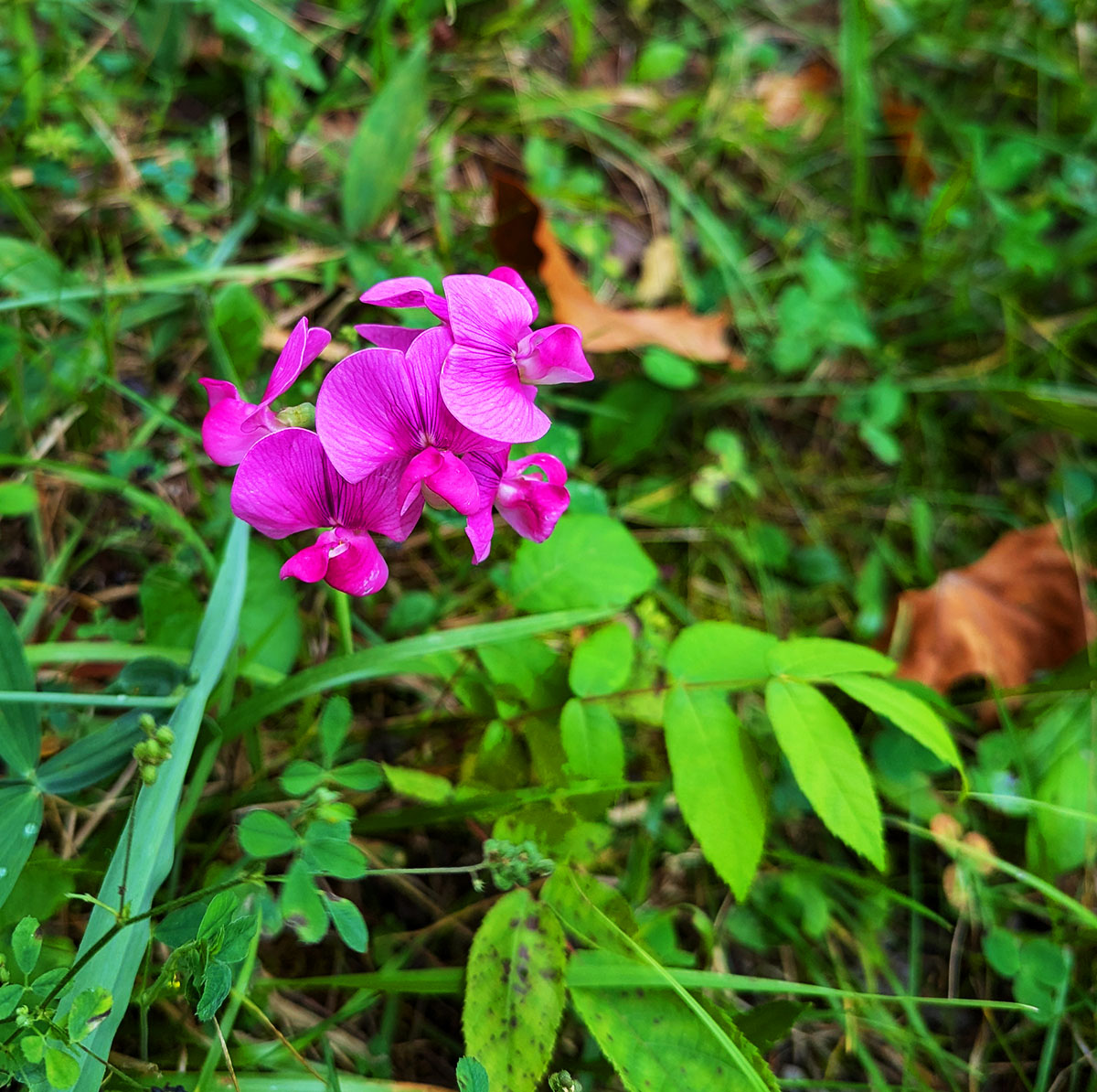
Showy clusters of bright pink to magenta pea-shaped flowers.
Each flower displays the classic Fabaceae structure:
Blooms typically appear in early to mid-summer and may continue intermittently.
Unlike annual sweet pea (Lathyrus odoratus), this species is generally non-fragrant.
Produces flat, elongated seed pods containing multiple round seeds. Pods dry brown and split when mature.
Seeds are not edible and may be mildly toxic if consumed in quantity.
Native to southern Europe.
Widely naturalized across North America.
Frequently found:
In many regions it persists for decades once established.
Prefers:
Highly drought tolerant once established.
Thrives in unmanaged edges and transitional spaces — particularly where it can climb through shrubs, fences, or tall grasses.
Scarification improves germination.
Self-seeding is common in favorable conditions.
Generally resistant to major pest pressure.
Possible issues:
Can become locally aggressive due to vigorous growth and self-seeding.
This plant is often mistaken for edible garden peas or annual sweet peas. It is ornamental only.
While attractive and useful for pollinators, it can escape cultivation and establish long-term colonies in disturbed ecosystems.
The structural similarity between Lathyrus species makes leaf width and flower size important identification features.
Best managed intentionally rather than casually introduced.
Observed growing low among mixed meadow grasses.
Flower clusters compact and richly colored.
Leaflets broad and paired with active tendrils present.
No detectable fragrance noted at time of observation.
All photographs and written material on this site are released for educational and artistic use.
You are encouraged to:
Credit is appreciated but not required. Knowledge grows when it moves.