
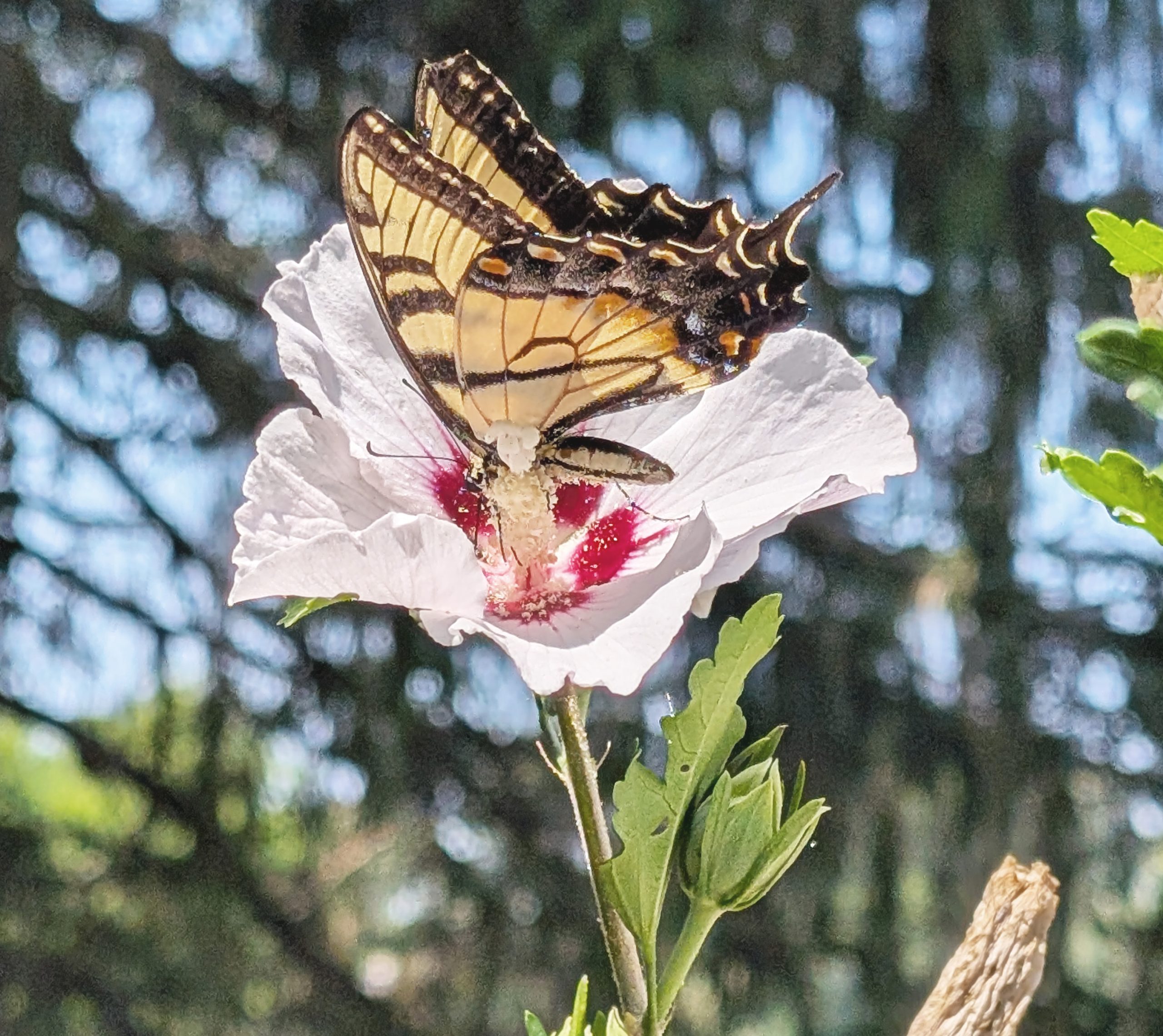
Kingdom: Animalia
Phylum: Arthropoda
Class: Insecta
Order: Lepidoptera
Family: Papilionidae
Genus: Papilio
Species: Papilio glaucus
A large, showy swallowtail butterfly with a wingspan typically ranging from 7.5–14 cm (3–5.5 inches). Recognized immediately by its bold yellow ground color and black “tiger” striping across the forewings.
The underside is paler yellow with softer striping and visible blue and orange markings. When backlit, wings take on a translucent stained-glass appearance.
Widespread across eastern North America:
Common in Pennsylvania and throughout the Mid-Atlantic.
They are strong fliers and frequently move between canopy trees and lower flowering plants.
Caterpillars feed on a variety of trees, including:
Adults are generalist nectar feeders and important pollinators in mixed-edge habitats.
Despite these pressures, the species remains common and stable across much of its range.
The Eastern Tiger Swallowtail is one of the most recognizable butterflies in eastern North America. Its size and coloration make it a flagship species for pollinator awareness.
The dark female morph represents an evolutionary response to predation, mimicking toxic swallowtail species — a classic example of Batesian mimicry.
Location Context: Garden edge with flowering hibiscus.
Behavior Observed: Adult feeding on hibiscus bloom.
Lighting: Strong natural backlight producing translucent wing glow.
Sex Identification: Likely female, yellow morph (based on size and visible hindwing coloration).
Ecological Note: Hibiscus, while often cultivated, provides valuable nectar support for large swallowtails during peak summer activity.
This individual demonstrates classic underside patterning and intact tail structures — indicating good condition and likely recent emergence within the seasonal brood.
To support Eastern Tiger Swallowtails:
All Cernunnos Foundation plant and animal profiles, including text and accompanying imagery, are made available for educational and artistic use. Share freely. Build upon responsibly. Attribution appreciated but not required.