
Domain: Eukaryota
Kingdom: Animalia
Phylum: Chordata
Class: Aves
Order: Strigiformes
Family: Tytonidae
Genus: Tyto
Species: Tyto alba
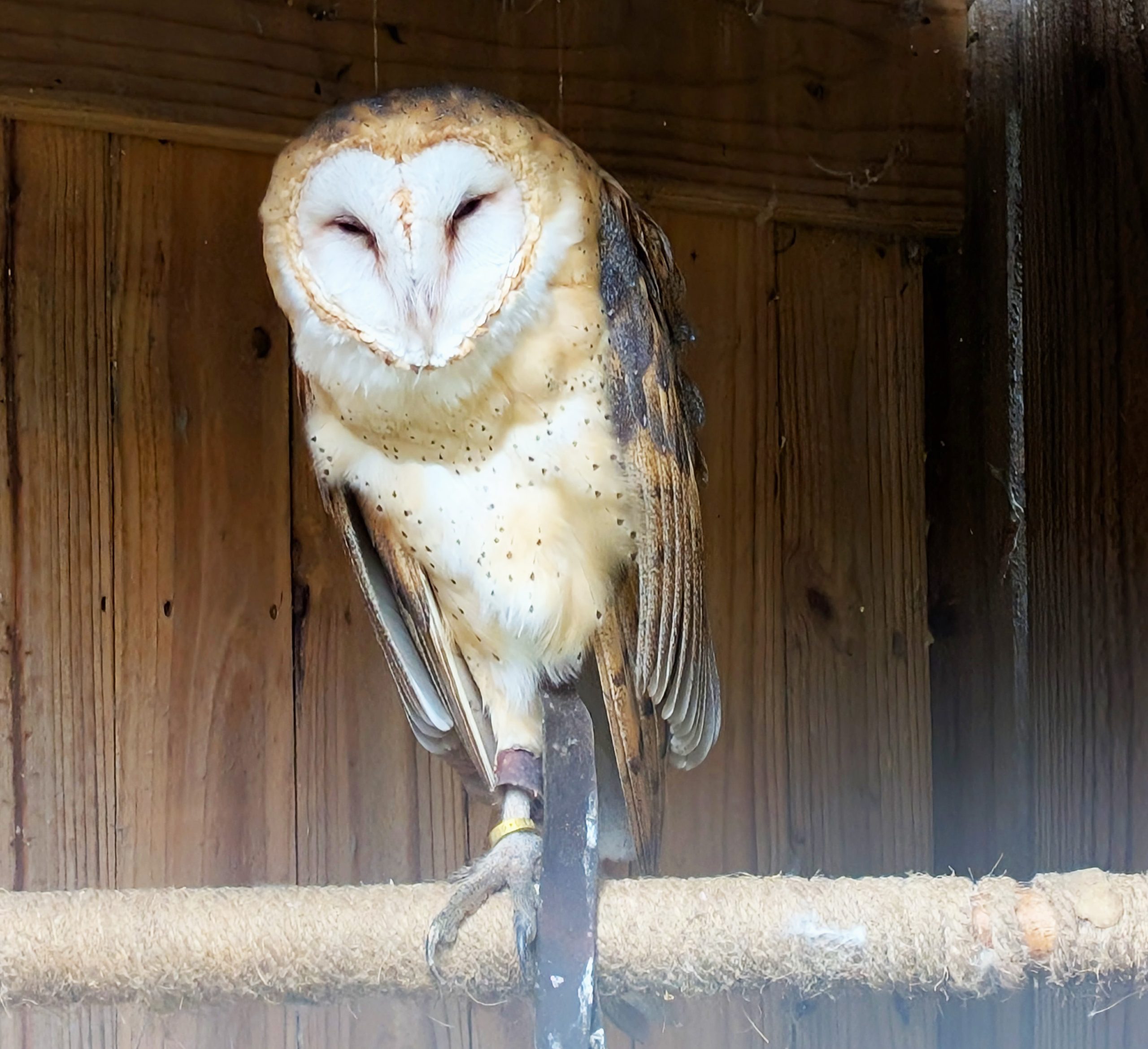
The Barn Owl is a medium-sized, pale owl famous for its heart-shaped facial disk, silent flight, and night-hunting precision. It is built like a purpose-made listening device: long legs, a light frame, broad wings, and facial structures that help funnel sound toward asymmetrically placed ears for pinpoint prey location in darkness.
Barn Owls primarily hunt small mammals—especially mice, voles, and rats—using sound as much as sight. They often patrol open ground (fields, pastures, marsh edges) and strike with swift, controlled drops. Pellets (regurgitated packs of fur and bones) accumulate under favored roosts and are classic field evidence of presence.
Unlike the “hoot” many people expect, Barn Owls are known for harsh, drawn-out screeches, hisses, and rasping calls—sounds that can carry far at night and are frequently mistaken for something uncanny by people unfamiliar with them.
Tyto alba has one of the broadest distributions of any owl species, occurring across large portions of North America, Central and South America, Europe, Africa, southern Asia, and many islands. Local abundance varies with habitat quality, prey availability, and nesting sites.
Habitat (wild): Open landscapes with hunting ground and nearby roost/nest structure—barns, silos, old buildings, church belfries, cavities in large trees, cliffs, and nest boxes. They favor edges: field margins, hedgerows, drainage corridors, and meadow systems.
Human compatibility: Barn Owls can be powerful allies in rodent control when provided safe nesting options (properly placed nest boxes) and when rodenticide use is minimized or eliminated.
Safety note: Secondary poisoning from anticoagulant rodenticides is a serious risk to owls and other raptors. If the goal is “owl-friendly,” integrated pest management and habitat support beat poison every time.
Barn Owls nest in cavities and man-made structures, laying clutches typically ranging from a few eggs to larger clutches when prey is abundant. In good prey years, they may raise multiple chicks successfully; in lean years, productivity drops sharply. Young are fed a steady supply of small mammals and develop quickly, fledging once they can fly and hunt progressively on their own.
Barn Owls have a way of making the night feel “occupied.” You might not see them at first—just a pale shape sliding low over a field like fog with intent. The soundscape matters: a sudden hush of small birds at dusk, a nervous rustle in grass, then that silent pass overhead. If you’re lucky, you’ll hear the signature screech—less a song than a warning that the dark has working professionals in it.
Cernunnos Foundation note: The contents of this website (including profiles like this one) are provided freely for educational and artistic use. Reuse is encouraged when it helps people learn, teach, document, or create—credit appreciated where practical.