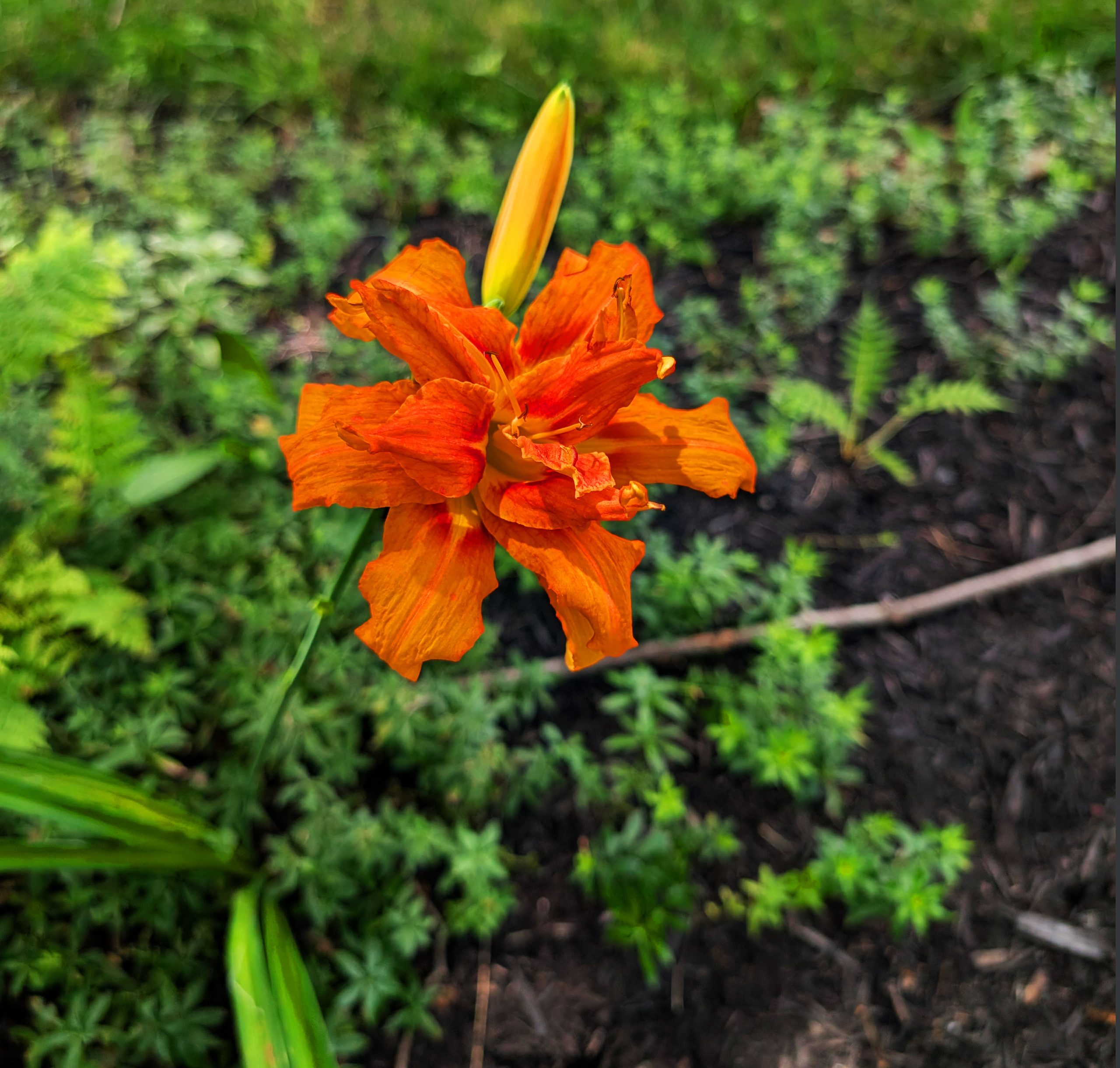
‘Kwanso’ — Double Orange Daylily
Taxonomy
- Kingdom: Plantae
- Clade: Angiosperms
- Clade: Monocots
- Order: Asparagales
- Family: Asphodelaceae
- Subfamily: Hemerocallidoideae
- Genus: Hemerocallis
- Species: Hemerocallis fulva
- Cultivar: ‘Kwanso’
Common Names by Region
- North America: Double Orange Daylily, Kwanso Daylily
- UK / Europe: Double Day Lily (cultivar)
- General: Double Orange Kwanso
Description
Morphology
Hemerocallis fulva ‘Kwanso’ is a clump-forming, herbaceous perennial distinguished by its double and fully double flowers—each bloom with multiple layers of ruffled, orange petals. Foliage is strap-like, arching, and grass-like, forming dense clumps 30–45 cm (12–18 in) tall; floral scapes rise above the foliage.
Flower Characteristics
Flowers open sequentially from buds on a branched scape; each flower typically lasts a single day, but abundant buds ensure extended bloom periods. The double blooms lack the reproductive structures seen in single blooms, often resulting in reduced seed set and a greater aesthetic focus.
Growth Habit
Clump-forming; spreads slowly by short rhizomes to form colonies over time. Not aggressive like some species forms, but reliable and persistent.
Known Range
Originally derived from Asian daylily ecotypes, H. fulva cultivars like ‘Kwanso’ have become widely naturalized and are grown in temperate gardens worldwide. They are especially established in North America, Europe, and parts of East Asia.
Care / Habitat
Light
Full sun to light shade. Best flowering in full sun (≥6 h/day) with afternoon shade in the hottest climates.
Soil
Adaptable to a wide range of soils; prefers well-drained loam with moderate fertility. Tolerates clay and sandy soils if moisture is adequate.
Moisture
Moderate water requirements; benefits from consistent moisture but tolerates short dry periods once established. Avoid persistently soggy substrates.
Temperature / Climate
Hardy in USDA Zones ~3–9 (variable by locale). Performs reliably through cool to warm temperate conditions.
Propagation / Reproduction
- Vegetative: Division of clumps in early spring or after flowering (late summer/early fall). Division both rejuvenates plants and maintains cultivar fidelity.
- Seed: Doubles like ‘Kwanso’ often set few viable seeds due to reduced reproductive structures; seed propagation is uncommon and does not guarantee true-to-type offspring.
Pests / Diseases / Threats
Pests
- Aphids (various) — occasional sap-feeding; manageable with monitoring.
- Thrips — may scar blooms.
- Spider mites — under hot, dry conditions.
Diseases
- Leaf streak (caused by Aureobasidium spp.) — can cause spotting and chlorosis; hygiene and spacing help minimize.
- Crown rot / root rot in poorly drained soil.
Threats
Generally robust; main threats are environmental (excessive wetness) and high pest pressure in suboptimal conditions.
Additional Notes
- ‘Kwanso’ is prized for its double floral form and rich orange color.
- Unlike single daylilies that produce seeds and fertile pollen, many double cultivars function primarily as ornamentals with limited reproductive viability.
- Daylilies are not true lilies (Lilium spp.) despite common naming.
Maintenance / Management
- Division: Every 3–5 years to control clump size and vigor.
- Deadheading: Removing spent flower stalks improves appearance; does not significantly affect future bloom flushes.
- Mulching: Helps conserve moisture and suppress weeds.
- Fertilization: Balanced, slow-release fertilizer in spring supports foliage and bud production; avoid excessive nitrogen that favors leaves over flowers.
Post Views: 65