
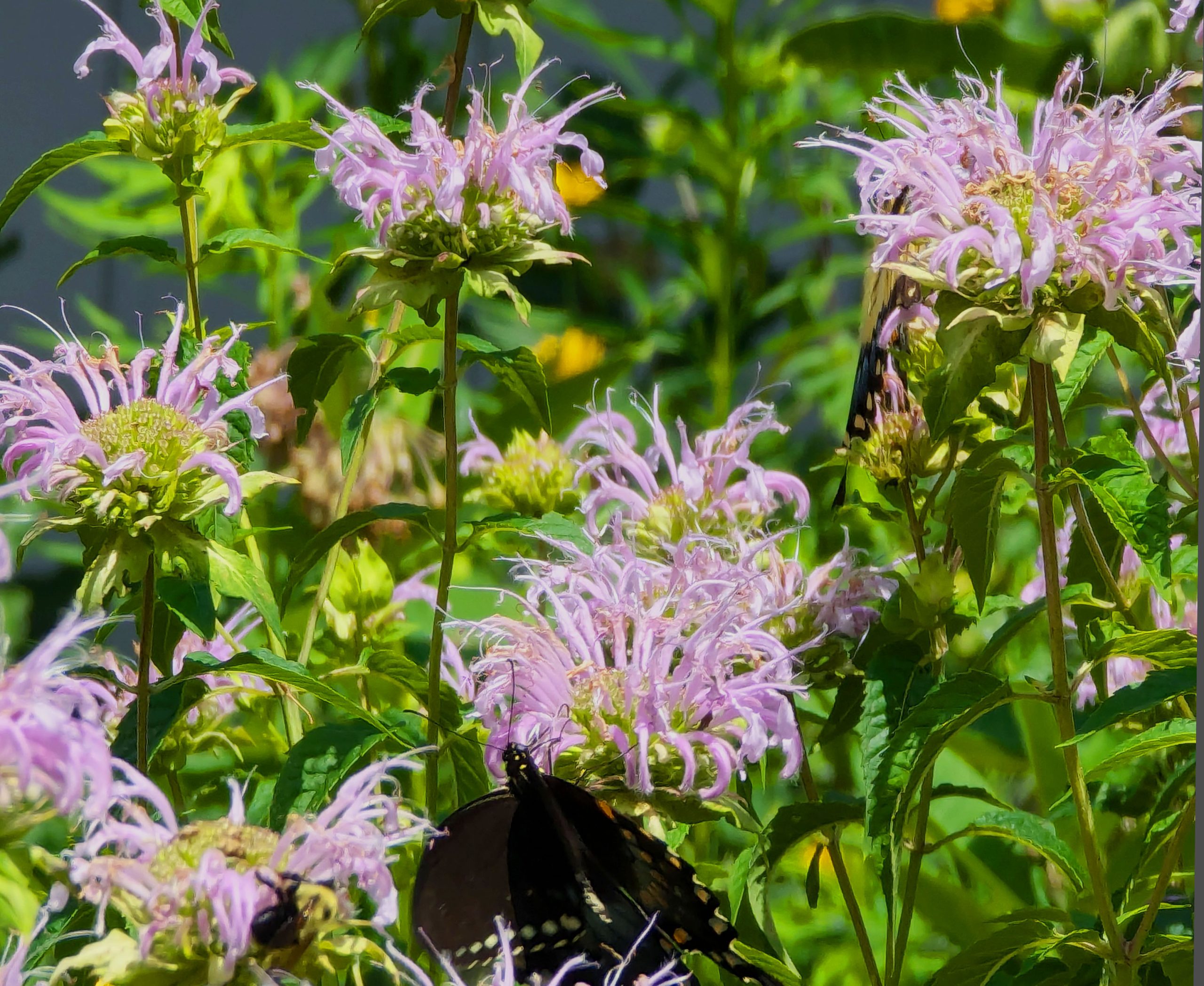
Kingdom: Plantae
Clade: Tracheophytes
Clade: Angiosperms
Clade: Eudicots
Clade: Asterids
Order: Lamiales
Family: Lamiaceae
Genus: Monarda
Species: M. fistulosa
Herbaceous perennial native to much of North America. Typically 2–4 feet tall, forming loose clumps via rhizomes. Square stems are characteristic of the mint family.
Opposite, lance-shaped to ovate, lightly toothed, and aromatic when crushed. Scent ranges from oregano-like to thyme-like due to thymol and related compounds.
Distinctive lavender to pale pink tubular blooms arranged in terminal clusters. Bracts beneath flowers may show subtle coloration. Bloom period: mid- to late summer.
Spreading rhizomatous system. Establishes colonies over time but is not aggressively invasive under balanced conditions.
Native across:
Thrives in full sun to partial shade. Adaptable to dry, average, or moderately rich soils.
Light: Full sun preferred
Soil: Well-drained; tolerates poor soils
Water: Moderate; drought tolerant once established
pH: Neutral to slightly alkaline preferred but adaptable
Performs well in:
Good air circulation significantly reduces mildew pressure.
A strong contributor to resilient meadow ecology.
Historically used by Indigenous communities for:
Leaves contain thymol, a compound also found in thyme and oregano.
Not to be confused with cultivated garden bee balm hybrids (Monarda didyma and others), which often have brighter red blooms and higher mildew susceptibility.
Wild Bergamot is a structural plant in meadow systems. It fills the late-summer nectar window when many early-season blooms have faded. Its aromatic oils signal its membership in the mint family immediately upon touch.
In a regenerative design context, this plant acts as both pollinator support and aesthetic anchor. It does not demand high fertility. It does not demand irrigation once established. It participates rather than dominates.
All content and imagery produced by the Cernunnos Foundation are made available for educational and artistic use. Reproduction and adaptation are encouraged in the spirit of open ecological knowledge.