
Kingdom: Plantae
Clade: Tracheophytes
Clade: Angiosperms
Clade: Monocots
Order: Asparagales
Family: Asphodelaceae
Subfamily: Hemerocallidoideae
Genus: Hemerocallis
Cultivar: Hemerocallis ‘Black Eyed Stella’
Daylily
Reblooming Daylily
‘Black Eyed Stella’ Daylily
Stella-type Daylily
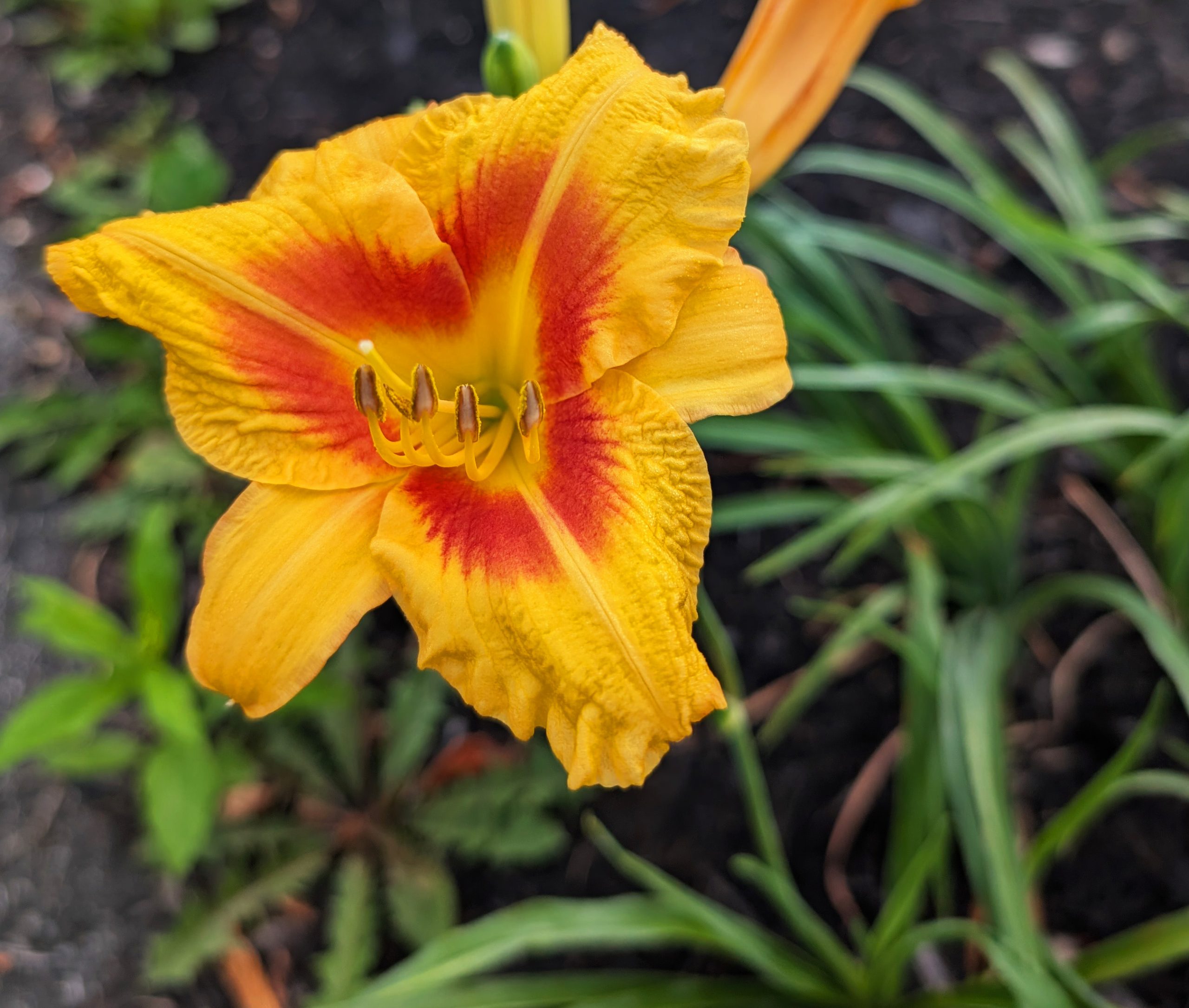
‘Black Eyed Stella’ is a compact perennial cultivar in the daylily family, forming dense clumps of arching, grass-like foliage. Plants typically reach 12–18 inches (30–45 cm) in height with slightly wider spread as clumps mature.
Unlike many traditional daylilies that bloom in a short seasonal flush, this cultivar is known for its extended reblooming habit, producing flowers repeatedly throughout the growing season.
Leaves are narrow, strap-like, and bright to medium green. They emerge from the crown in fans and arch outward, creating a fountain-like texture commonly used in ornamental plantings.
The foliage remains attractive throughout most of the growing season and helps suppress weeds once clumps are established.
Each bloom lasts approximately one day, a defining trait of the genus Hemerocallis (from Greek meaning “beauty for a day”). However, multiple buds are produced on each scape, allowing the plant to flower continuously for weeks or months.
Flowers of ‘Black Eyed Stella’ are:
• Golden yellow to warm orange-yellow
• Approximately 2–3 inches across
• Marked by a distinct reddish-maroon eye surrounding the throat
• Slightly ruffled at the petal edges
The color contrast gives the cultivar its name and creates strong visual impact in garden beds.
Early summer through late summer, often continuing into early autumn depending on climate and maintenance.
Daylilies are originally native to East Asia, particularly China, Korea, and Japan.
Modern cultivars such as ‘Black Eyed Stella’ are horticultural hybrids widely cultivated throughout:
• North America
• Europe
• Temperate regions worldwide
They thrive in USDA hardiness zones 3–9, making them one of the most adaptable ornamental perennials.
Daylilies are highly adaptable plants suitable for a wide range of garden conditions.
Preferred conditions include:
Sunlight: Full sun to partial shade
Soil: Average to fertile soil with good drainage
Moisture: Moderate water; tolerant of occasional drought once established
They are commonly planted in:
• Perennial borders
• Foundation plantings
• Roadside landscaping
• Public gardens
• Naturalized garden beds
Their durability and long bloom season make them popular in low-maintenance landscape design.
Daylilies reproduce primarily through division of clumps.
Gardeners typically divide plants every 3–5 years to:
• Maintain vigorous flowering
• Control plant spread
• Produce additional plants
Divisions are best performed in early spring or early autumn.
Seed propagation is possible but rarely used for named cultivars because offspring will not remain genetically identical to the parent plant.
Daylilies are generally resistant to most garden pests and diseases.
Occasional issues may include:
Daylily rust (Puccinia hemerocallidis)
Aphids
Thrips
Spider mites
These problems are typically minor in healthy plantings.
Daylilies are among the most hybridized ornamental plants in the world, with tens of thousands of registered cultivars developed by horticultural breeders.
The cultivar ‘Black Eyed Stella’ is a descendant of the famous ‘Stella de Oro’, one of the most widely planted reblooming daylilies in landscape horticulture.
Their resilience, extended bloom period, and wide climatic tolerance make them a cornerstone species in modern ornamental gardening.
Minimal care is required beyond basic garden maintenance.
Recommended practices:
• Remove spent flower stalks after blooming
• Divide clumps every few years to maintain vigor
• Cut back foliage after frost in colder climates
• Apply light compost or balanced fertilizer in spring
Once established, daylilies are extremely durable and often persist for decades.
This profile and associated images are provided by the Cernunnos Foundation as part of its open ecological reference archive.
All written material and visual references are released for educational, artistic, and ecological documentation purposes. They may be reused freely in classrooms, research, or creative work with attribution where possible.