
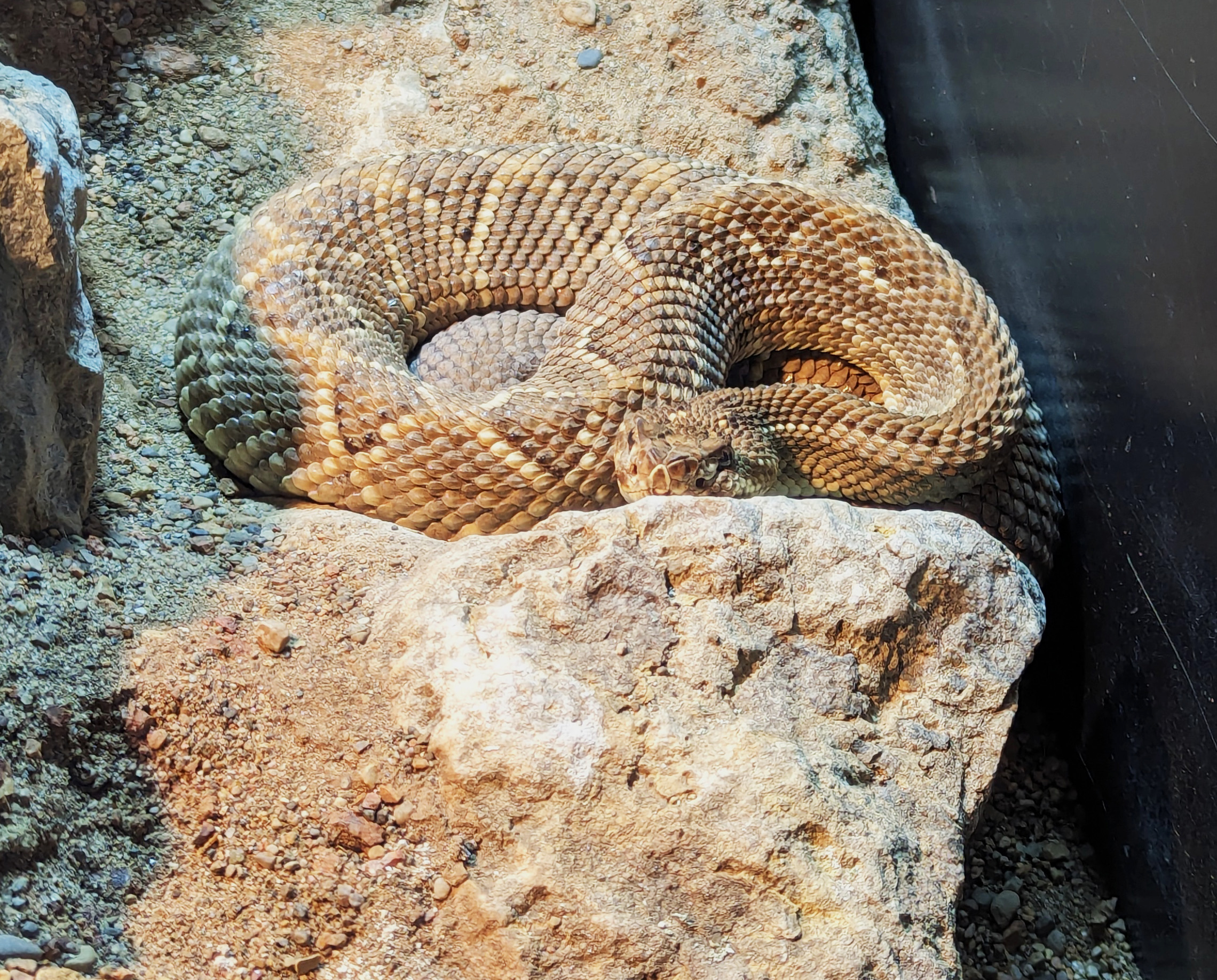
The Western Diamondback is a large, heavy-bodied pit viper and the most widely distributed large rattlesnake in North America. Adults commonly reach 100–150 cm (3.5–5 ft), with occasional individuals exceeding 180 cm (6 ft). The body is thick and muscular throughout, tapering abruptly to a segmented rattle at the tail tip.
The head is broad and distinctly triangular, sharply offset from a noticeably narrower neck, with large loreal heat-sensing pits between the nostrils and eyes, and vertical elliptical pupils.
Ground color is highly variable across the species’ wide range:
Running the length of the back is a series of 23–45 diamond-shaped dorsal blotches in brown to dark umber, each outlined in cream or white scales and containing conspicuous dark internal spotting — a key field mark distinguishing C. atrox from the closely related Red Diamond Rattlesnake (C. ruber), which lacks this internal spotting. The first few blotches near the neck may appear more rectangular before transitioning into the classic diamond shape.
The tail bears bold alternating black and white rings immediately proximal to the rattle — a consistent and reliable field mark across the entire species, referenced in the colloquial name “coon tail rattler.”
The rattle is composed of interlocking hollow keratin segments, one added with each shed cycle. Shedding occurs 2–4 times annually; rattle length does not reliably indicate age, as segments break off regularly. The rattle is vibrated at 60 or more times per second, producing the species’ iconic dry buzzing warning audible at surprising distances.
Like all pit vipers, Crotalus atrox possesses loreal pit organs — paired infrared-sensitive heat receptors that detect thermal gradients with precision, sometimes registering differences of a fraction of a degree. Combined with chemoreception via a forked tongue and Jacobson’s organ, the Western Diamondback is an exceptionally capable predator in total darkness.
Crotalus atrox is a habitat generalist, one of the most ecologically flexible rattlesnake species in North America. It occupies elevations from below sea level to approximately 2,000 m (6,500 ft) across a wide range of environments:
The species shows a strong affinity for rocky terrain, which provides shelter, ambush cover, and thermoregulation sites. Individuals commonly spend daytime hours coiled in shade beneath rock overhangs, shrubs, or debris — as displayed in the photograph above, where this individual occupies a sun-warmed rock outcrop in a typical basking posture.
Western Diamondbacks are opportunistic generalist predators employing a classic ambush strategy. Diet shifts across life stages:
Prey is envenomated via a rapid strike-and-release, then tracked by scent and consumed headfirst once immobilized.
Crotalus atrox produces a primarily hemotoxic venom with significant cytotoxic components. Venom metalloproteinases cause hemorrhage, myonecrosis, and microvascular disruption that can impair long-term tissue regeneration.
Local effects of envenomation include:
Systemic effects may include nausea, dizziness, and in severe cases, convulsions. Prompt medical treatment with antivenom is essential.
Despite a moderate laboratory LD50, C. atrox is considered responsible for more snakebite fatalities in northern Mexico and more total snakebite incidents in the United States than any other rattlesnake species, owing to its large venom glands, high yield, wide distribution, and heavy overlap with human-populated areas.
Crotalus atrox is ovoviviparous, giving birth to live young rather than laying eggs.
Newborns arrive fully formed, averaging 25–35 cm, with functional venom and a pre-button rattle segment. Males engage in ritualized combat during mating season — intertwining bodies and attempting to force rivals down — without biting.
Natural predators include:
Primary anthropogenic threats include:
Despite these pressures, the species is currently classified as Least Concern by the IUCN and remains abundant throughout most of its range.
The Western Diamondback is the most frequently encountered venomous snake in conflict with human development across the American Southwest. Despite its reputation, C. atrox typically relies on stillness and camouflage as its first line of defense, rattling as a warning before striking. Most bites occur when the snake is accidentally stepped on, handled, or deliberately provoked.
Venom components are the subject of ongoing biomedical research, with potential applications in anticoagulant, analgesic, and cardiovascular drug development.
The Western Diamondback is not currently protected at the federal level in the United States. Conservation priorities include:
In natural ecosystems C. atrox plays an important role as a mid-level predator, suppressing rodent populations and serving as prey for raptors and other wildlife.