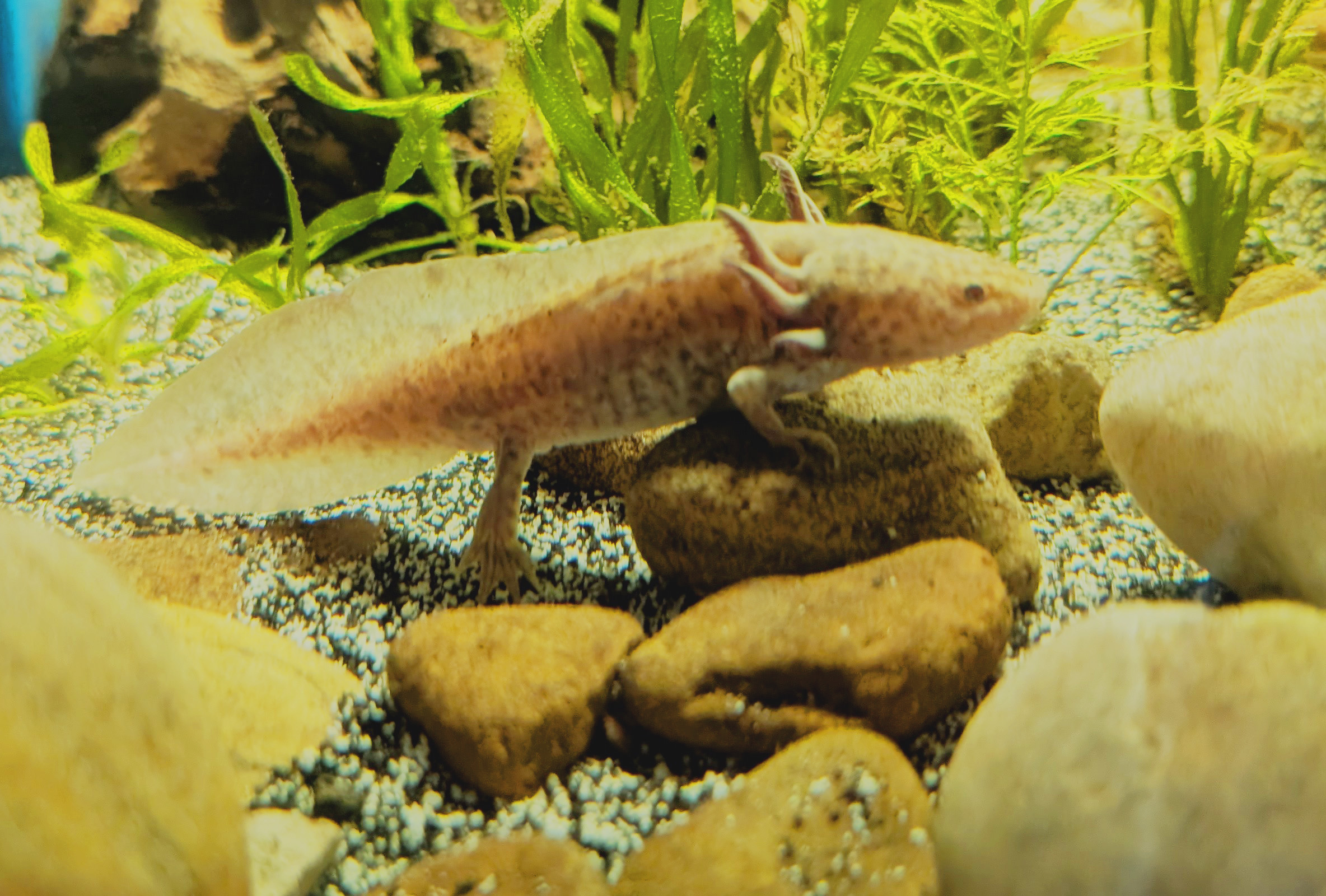
Ambystoma mexicanum
Taxonomy
- Kingdom: Animalia
- Phylum: Chordata
- Class: Amphibia
- Order: Urodela (Caudata)
- Family: Ambystomatidae
- Genus: Ambystoma
- Species: Ambystoma mexicanum
Common Names by Region
- Axolotl
- Mexican Walking Fish (misleading common name)
- Water Dog (colloquial, shared with other salamanders)
- Ajolote (Spanish, from Nahuatl āxōlōtl)
Description
General Appearance
The wild-type axolotl displays a mottled olive, brown, and gray coloration with subtle speckling—designed for camouflage in murky lakebeds. The body is soft, elongated, and fully aquatic, with a broad head and lidless eyes.
Size
Typically 6–12 inches (15–30 cm) in captivity, though growth depends on conditions and feeding.
Distinguishing Features
- Prominent external feathery gills (usually pink to purplish)
- Dorsal fin extending from mid-back through the tail
- Wide, flat head with a gentle expression
- Fully aquatic, neotenic adult form (retains larval traits permanently)
- Lack of eyelids
Known Range
Native exclusively to the lake system of:
- Lake Xochimilco (and historically Lake Chalco) in central Mexico
Wild populations are now critically endangered, surviving only in fragmented canal systems.
Care / Habitat
In the wild:
- Cool, slow-moving freshwater canals
- Dense aquatic vegetation
- Silty or muddy substrate
In captivity:
- Temperature: 60–68°F (critical—heat stress above ~72°F)
- Water: Clean, low ammonia/nitrite, gentle flow
- Substrate: Fine sand or bare bottom (to avoid impaction)
- Cover: Rocks, driftwood, plants
Axolotls are ambush predators and prefer low-light, structured environments.
Propagation / Reproduction
- Breeding triggered by seasonal cooling and photoperiod changes
- Males deposit spermatophores, females pick them up
- Eggs are laid individually on plants or surfaces
- Hatch into free-swimming larvae
Unlike most salamanders, axolotls do not naturally metamorphose under normal conditions.
Pests / Diseases / Threats
- Fungal infections (often linked to poor water quality)
- Ammonia/nitrite toxicity
- Heat stress
- Ingestion of inappropriate substrate
- In the wild: habitat loss, pollution, invasive fish species
Additional Notes
The axolotl is one of the most important organisms in biological research due to its:
- Extreme regenerative ability (limbs, spinal cord, heart tissue)
- Stable neotenic state (retention of juvenile traits into adulthood)
The wild-type coloration seen here is closest to the original natural form, in contrast to common captive morphs (leucistic, albino, melanoid, etc.).
Maintenance / Management
- Maintain strict temperature control
- Perform regular water testing and partial changes
- Feed appropriately sized prey (worms, pellets, soft-bodied foods)
- Avoid tankmates that may nip gills
- Monitor for stress indicators (curling gills, floating, loss of appetite)
Post Views: 262