
Kingdom: Animalia
Phylum: Chordata
Class: Mammalia
Order: Artiodactyla
Family: Bovidae
Subfamily: Bovinae
Genus: Bos
Species: Bos indicus
Common Hybrid Form: Bos indicus × Bos taurus
Zebu
Humped Cattle
Indian Cattle
Brahman-type Cattle
Bos indicus cattle
Zebu cattle are a domesticated bovine species distinguished by the prominent hump over the shoulders, loose skin (dewlap), and long often drooping ears. Their bodies tend to be leaner than many European cattle breeds, with strong legs and a high tolerance for heat and drought.
The hump is composed of muscle and fat tissue and serves as an energy reserve. The loose skin and large surface area of the dewlap assist with thermoregulation.
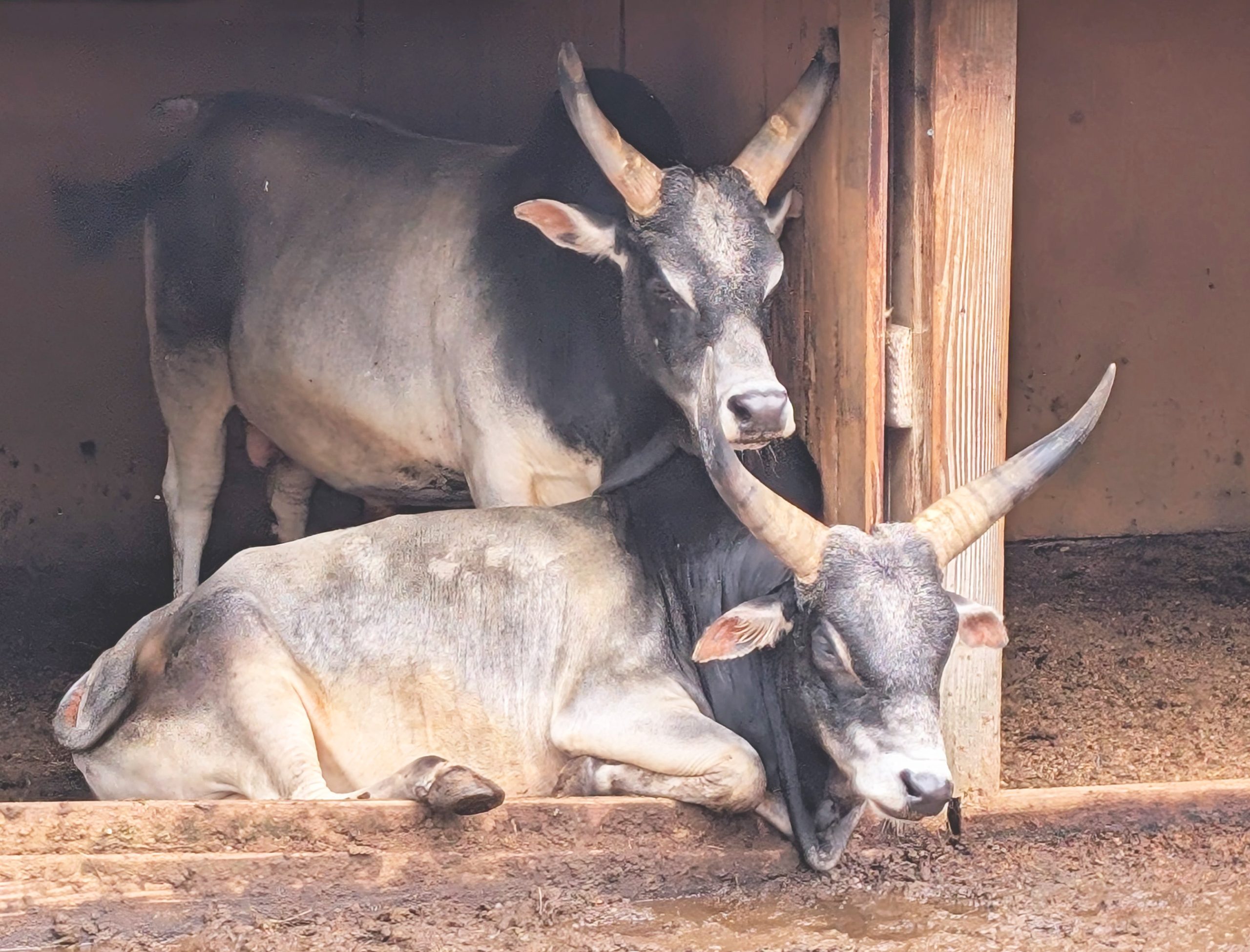
In the photograph shown here, two individuals are resting in the shade of a livestock shelter. Both display the classic forward-curving horns, compact body shape, and distinctive shoulder hump characteristic of zebu cattle. Their grey-to-charcoal coloration is common among many traditional zebu breeds.
Zebu cattle are generally calm herd animals. They are highly adapted to hot climates and are capable of tolerating conditions that would stress many European cattle breeds.
Typical behaviors include:
Their ability to remain active and productive under harsh environmental conditions has made them extremely important in many agricultural systems.
Zebu cattle originated in South Asia, particularly the Indian subcontinent.
Today they are widespread throughout:
Many modern cattle breeds used in warm climates are zebu hybrids, combining the heat tolerance of Bos indicus with the meat or dairy traits of Bos taurus cattle.
Zebu cattle are exceptionally well suited to:
Key environmental advantages include:
Because of these traits, zebu cattle form the backbone of livestock production in many hot regions of the world.
Zebu cattle reproduce similarly to other domestic cattle.
Gestation period: approximately 283 days.
Females typically give birth to a single calf, though twins occur occasionally.
Calves are usually able to stand and walk within a short period after birth and remain dependent on the mother’s milk for several months before gradually transitioning to grazing.
Zebu cattle are generally more resistant to parasites and heat stress than many European breeds.
However, they can still be affected by:
Their resilience has made them extremely valuable in regions where veterinary resources may be limited.
Zebu cattle represent one of the two primary domesticated cattle lineages in the world:
Archaeological evidence suggests zebu cattle were domesticated around 8,000–10,000 years ago in the Indus Valley region.
Today they play a major role in:
Many well-known tropical breeds, including Brahman cattle, are derived from zebu ancestry.
Successful management of zebu cattle generally includes:
Because of their adaptability, zebu cattle are often raised in low-input agricultural systems where other cattle breeds would struggle.