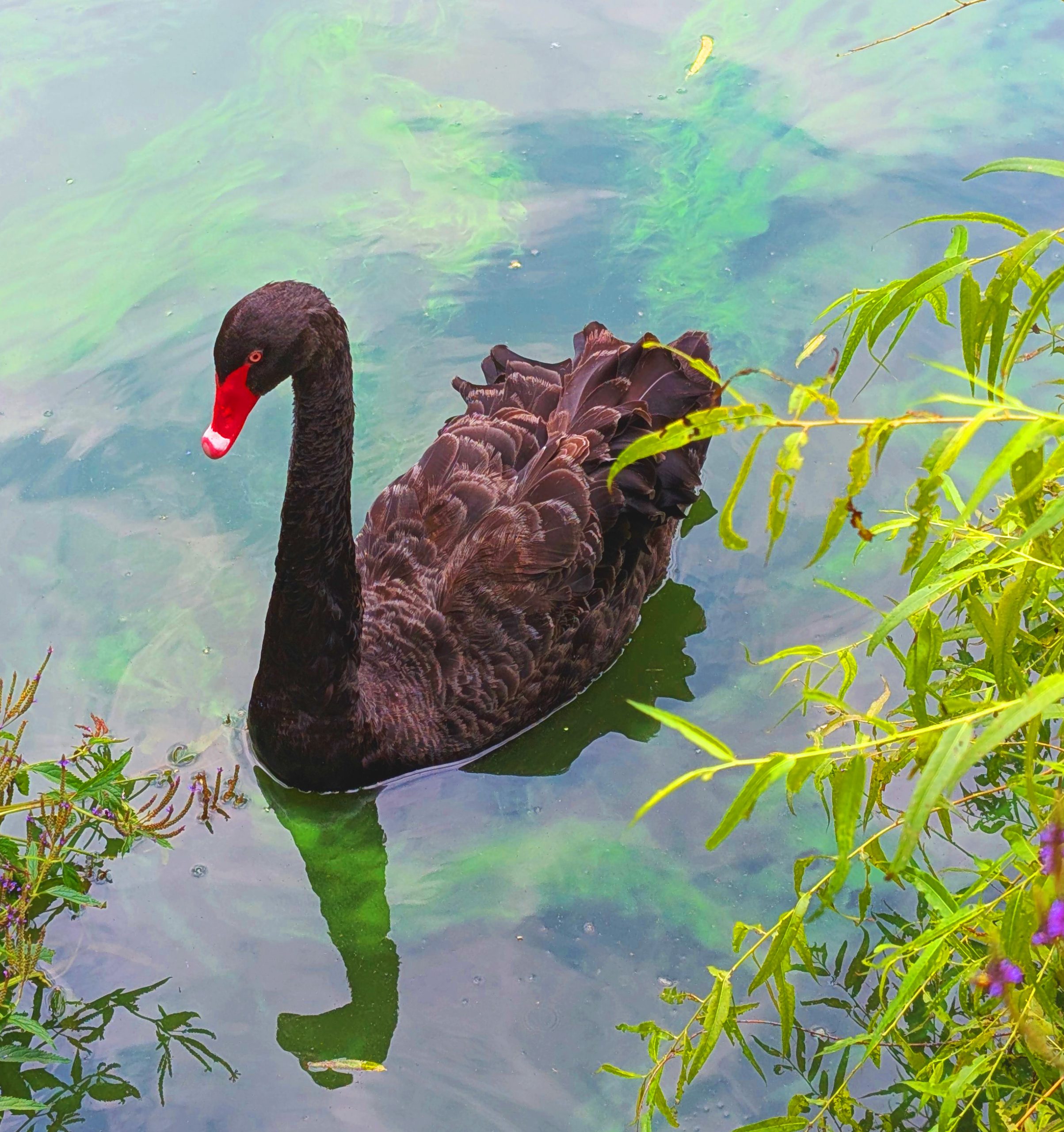
Black Swan
Taxonomy
Kingdom: Animalia
Phylum: Chordata
Class: Aves
Order: Anseriformes
Family: Anatidae
Genus: Cygnus
Species: Cygnus atratus (Latham, 1790)
Common Names by Region
General / English: Black Swan
Australia: Black Swan (widely used nationally)
Scientific / Hobby Use: Cygnus atratus
Regional Reference: Native to Australia; introduced populations in parts of New Zealand and occasionally observed elsewhere as escapees or ornamental birds.
Description
Overview
The Black Swan is a large waterfowl species recognized by its almost entirely black plumage, contrasting white flight feathers, and vivid red bill. It is one of the most distinctive swans globally and serves as a strong symbol of Australian wetlands and coastal ecosystems.
Size
Adults typically measure 43–56 inches (110–142 cm) in length, with wingspans reaching roughly 5.2–6.6 feet (1.6–2.0 m). Males (cobs) are generally slightly larger than females (pens).
Coloration and Pattern
Plumage is predominantly black or very dark charcoal. The primary flight feathers are white and become highly visible during flight. The bill is bright red with a pale tip, and legs are dark gray to black.
Skin and Form
The species has a long, elegant neck often held in an S-curve. Body shape is streamlined for aquatic movement, with large webbed feet adapted for paddling and maneuvering in shallow water.
Behavior
Black Swans are mostly diurnal and highly social. They may form large flocks outside breeding periods. Their vocalizations are softer and more musical than those of many other swans. Pairs often form long-term bonds and can be defensive during nesting.
Known Range
The Black Swan is native to Australia, occurring across most temperate and coastal regions where permanent or seasonal water is available. Populations are common in lakes, estuaries, wetlands, and slow-moving rivers. Introduced populations exist in parts of New Zealand and in ornamental collections globally.
Care / Habitat
Wild Habitat (Ecology)
- Freshwater lakes and wetlands
- Estuaries and sheltered coastal bays
- Flooded grasslands and seasonal inland water systems
- Areas with abundant submerged vegetation
Captive Habitat (Best Practices)
- Large ponds or lakes with open water and gentle shoreline access
- Grazing areas with aquatic or semi-aquatic plants
- Shelter from extreme weather
- Quiet nesting zones with minimal disturbance
- Clean water with adequate circulation
Diet
Primarily herbivorous.
Typical Foods:
- Aquatic plants and algae
- Submerged vegetation
- Grass and shoreline plants
- Occasional small invertebrates taken incidentally
Handling and Ethics
Black Swans are large, strong birds and should not be handled unless necessary for medical or conservation purposes. Disturbing nesting birds can cause stress and nest abandonment.
Propagation / Reproduction
Courtship and Nesting
- Pair bonds are typically stable and long-term
- Courtship includes synchronized swimming and mutual display postures
- Nests are large mounds built from reeds and vegetation near water edges
Egg Laying and Incubation
- Typical clutch size ranges from 4–8 eggs
- Both parents participate in incubation and defense
- Incubation lasts around 35–40 days
Cygnets and Development
- Chicks (cygnets) hatch covered in gray down
- They are precocial and swim shortly after hatching
- Parents protect and guide young through early development
Pests / Diseases / Threats
Wild Threats
- Wetland drainage and habitat loss
- Pollution and water contamination
- Human disturbance during breeding
- Predation on eggs and chicks by introduced mammals
Captive Health Risks
- Water quality issues leading to infections
- Nutritional imbalance if fed inappropriate foods (e.g., excess bread)
- Stress from overcrowding or aggressive neighbors
Additional Notes
- The phrase “black swan” has become symbolic of rare or unexpected events due to the species’ historical significance in European scientific thought.
- They are strong fliers despite their size and can travel long distances in response to drought and shifting water availability.
- Juveniles gradually darken as they mature.
Maintenance / Management
- Maintain clean, vegetation-rich water bodies
- Provide sufficient space for flight and movement
- Protect nesting areas during breeding season
- Offer natural grazing opportunities
- Avoid artificial feeding that distorts natural diet
Educational Use
This site is open for educational use. Teachers and students are welcome to adapt, translate, and reuse with attribution.
Post Views: 67