
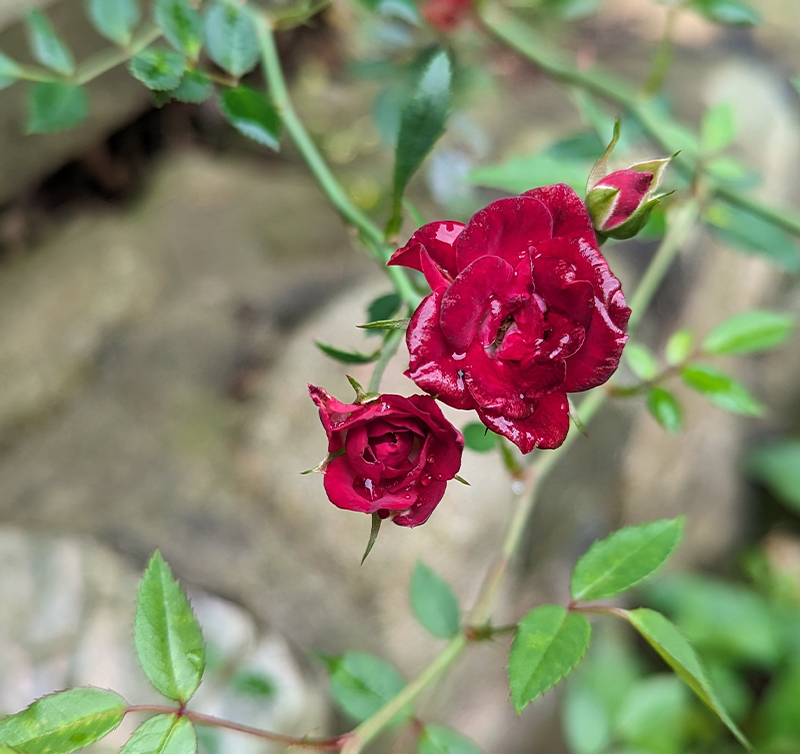
Kingdom: Plantae
Clade: Tracheophytes
Clade: Angiosperms
Clade: Eudicots
Order: Rosales
Family: Rosaceae
Genus: Rosa
Cultivar: ‘Red Cascade’
General / English: Red Cascade Climbing Rose
Horticulture / Trade: Red Cascade Miniature Climber
Informal / Garden Use: Crimson Cascade Rose, Mini Climbing Rose
Vigorous, fine-stemmed climbing rose with a cascading, arching form.
Produces long, flexible canes suited for trellises, fences, and walls.
Growth is moderate to fast in favorable conditions.
Height: 6–10 ft (1.8–3 m) with support
Spread: 3–6 ft (90–180 cm)
Form: Trailing to climbing
Small, compound, and finely textured.
Leaflets oval with serrated margins.
Color: bright to medium green.
Provides dense visual coverage when established.
Small, double to semi-double blooms.
Diameter: 1–2 in (2.5–5 cm).
Color: deep crimson to dark red.
Petals velvety with occasional lighter margins.
Centers often partially hidden.
Blooms in clusters.
Repeats flowering from late spring through fall.
Small, round rose hips.
Color: orange-red when mature.
Formed if spent blooms are left unpruned.
Attractive to birds.
Cultivar developed in the United States (mid-20th century breeding).
Derived from miniature rose lines adapted for climbing habit.
Cultivated worldwide in temperate regions.
Common in:
Not naturally occurring in the wild.
Prefers full sun (6–8 hours daily).
Tolerates light afternoon shade.
Reduced flowering in heavy shade.
Moderate, consistent watering.
Allow top soil to dry slightly between waterings.
Deep watering preferred over frequent shallow watering.
Well-draining, fertile loam ideal.
Prefers:
Avoid waterlogged sites.
Hardy to USDA Zones 5–9.
Tolerates summer heat with adequate moisture.
Winter protection recommended in colder regions.
Prefers moderate humidity.
Good airflow reduces disease pressure.
Avoid overcrowding.
Primarily propagated through:
Seed propagation not recommended for cultivars.
Moderate disease resistance with good care.
Compact climbing habit suitable for small spaces.
Continuous flowering through growing season.
High ornamental value in vertical gardens.
Well suited to container trellising.
Provides nectar for pollinators.
Rose hips support birds.
Contributes to urban habitat diversity.
Primarily ornamental in cultivation.
Moderate maintenance required.
Best suited for:
Red Cascade does not climb by strength.
It climbs by persistence.
Thin stems reach outward, searching for structure.
They curve.
They adapt.
They attach.
Then, quietly, the flowers arrive.
Deep red.
Dense.
Unapologetic.
They do not dominate space.
They inhabit it.
This is a rose that rewards patience and guidance.
Train it well, and it becomes architecture.
Ignore it, and it becomes chaos.
Not fragile.
Not aggressive.
Just responsive.
—
Blue Ribbon Team field notes are observations, not edicts.
Learn the place first. Then decide what it needs.