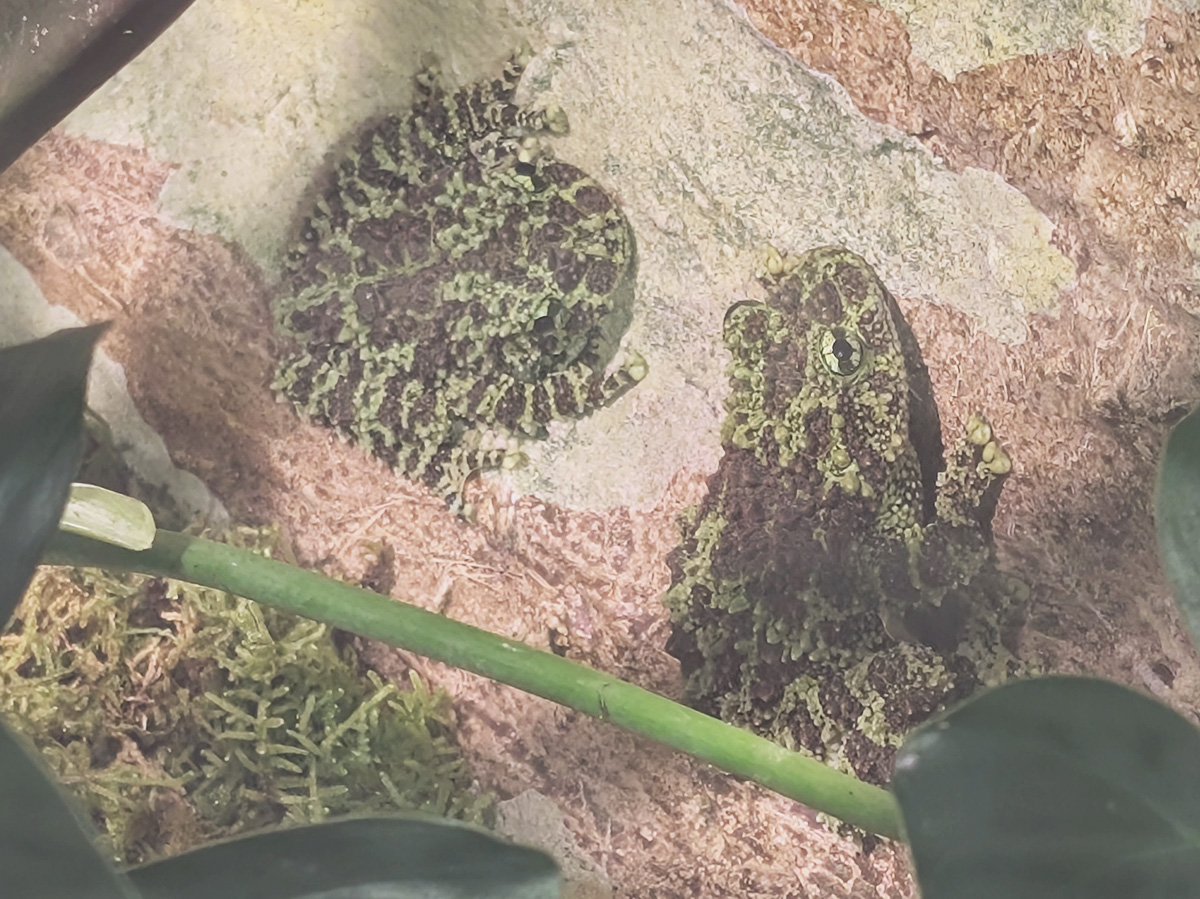
Theloderma corticale
Taxonomy
- Domain: Eukaryota
- Kingdom: Animalia
- Phylum: Chordata
- Class: Amphibia
- Order: Anura
- Family: Rhacophoridae
- Genus: Theloderma
- Species: Theloderma corticale
Common Names by Region
- United States / exhibit & hobby trade: Vietnamese mossy frog, mossy frog, Tonkin bug-eyed frog
- Vietnam (native range): Local names referencing its bark- and moss-like appearance
- General: Mossy tree frog
Description
Quick ID
- Skin: The signature. Bright green to blackish, covered in raised tubercles, spines, and bumps that mimic clumps of moss and lichen — one of the most complete camouflage textures in any frog.
- Coloration: Mottled green, black, and rusty brown, matching wet stone and moss. Pattern varies between individuals and shifts somewhat with mood and surroundings.
- Eyes: Gold-to-copper flecked iris with a horizontal pupil — often the only feature that breaks the camouflage, as in this photo.
- Size: Medium, roughly 2.5–3.5 inches; females larger than males.
- Feet: Large, sticky toe pads for climbing; webbed for a semi-aquatic life.
Defensive trait
- When threatened, it curls into a ball and plays dead (thanatosis), the moss pattern letting it vanish against rock and leaf litter until the threat passes.
Range
- Native to northern Vietnam and adjacent parts of southern China, in the montane evergreen forests of the region.
Habitat & Behavior
- A semi-aquatic, cave- and crevice-dwelling frog of cool, humid, forested uplands. Lives among wet rocks, flooded cavities, and mossy stream banks.
- Largely nocturnal and secretive; spends daylight motionless and camouflaged, often partly submerged with just the head showing.
- An accomplished climber and swimmer, equally at home on wet vertical rock and in standing water.
- Communicates with a low call; relies on stillness and disguise rather than speed to avoid predators.
Diet
- Insectivorous. Takes crickets, roaches, and other invertebrates in captivity; wild diet is small forest insects and arthropods.
- An ambush feeder — sits motionless and takes prey that wanders within range.
Reproduction
- Breeds in and around water-filled rock cavities and tree holes. Eggs are laid on surfaces just above the waterline.
- Hatching tadpoles drop into the water below to develop.
- Parental attendance of egg sites is documented in the genus; the species is a fairly reliable breeder in well-managed captive collections.
Threats / Conservation / Notes
- Faces pressure from habitat loss in its montane range and from collection for the international pet trade.
- Popular and widely bred in captivity, which eases some wild-collection demand; captive-bred animals are common in the exhibit and hobby world.
- Its camouflage and curl-and-freeze defense make it a favorite exhibit and education animal — a living demonstration of crypsis that most visitors walk right past without spotting.
Additional Notes
Ecology & Significance
- One of the clearest living examples of mimetic camouflage in amphibians — the tubercled skin doesn’t just match a color, it mimics the three-dimensional texture of moss and lichen, fooling both predators and passing eyes.
- The two frogs in this photo demonstrate it directly: one all but dissolves into the rock face, and only the gold eye of the second resolves the animal out of the background.
- A husbandry specialist’s frog — it wants cool temperatures, high humidity, clean water, and secure hides, which makes it more an exhibit and dedicated-keeper species than a casual pet.
In Exhibits
- Displayed in cool, planted, high-humidity paludarium setups with rock and moss features — the mossy, damp exhibit context of this photograph. Half the exhibit’s challenge is that visitors often can’t find the animal at all.
All Cernunnos Foundation materials are free to use for any educational purpose.
Views: 474