
Kingdom: Plantae
Clade: Angiosperms
Clade: Eudicots
Order: Asterales
Family: Asteraceae
Genus: Solidago
Species: Solidago rugosa Mill.
General / English: Wrinkleleaf Goldenrod, Rough-leaved Goldenrod
United States / Canada: Wrinkleleaf Goldenrod, Tall Goldenrod
Eastern North America: Rough Goldenrod, Woodland Goldenrod
Ecological / Restoration Use: Native Goldenrod, Pollinator Goldenrod
Solidago rugosa is one of the most reliable and adaptable goldenrods in eastern North America, valued for its late-season color, wildlife support, and structural presence in naturalized landscapes.
The plant grows as tall, upright clumps with firm, slightly rough stems and broad, textured leaves that feel faintly sandpapery to the touch. The foliage is deep green through summer, often taking on yellow or bronze tones in fall.
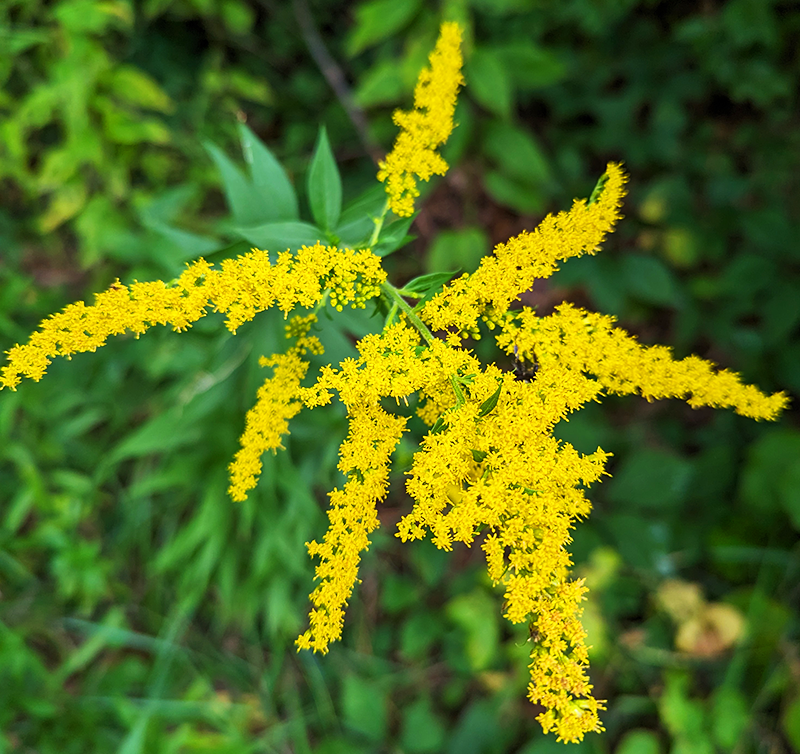
From late summer into autumn, the plant produces large, arching sprays of bright yellow flowers. These form dense, plume-like clusters that glow in low-angle sunlight and remain attractive for weeks. When in full bloom, wrinkleleaf goldenrod becomes a major visual anchor in meadows, roadsides, and pollinator gardens.
Wrinkleleaf goldenrod is known for:
Native primarily to:
Core range includes:
Typical native habitats:
Today, Solidago rugosa is widely used in native landscaping, restoration projects, and pollinator habitat plantings.
Light: Full sun to partial shade. Flowers best in sun but tolerates light woodland shade.
Temperature: Hardy perennial in temperate climates; tolerates cold winters and summer heat.
Humidity: Adaptable; handles both humid and moderate conditions well.
Water: Moderate moisture preferred; drought-tolerant once established.
Soil: Adaptable to many soil types; prefers well-drained loam but tolerates clay and sandy soils.
Form: Upright, clump-forming perennial
Typical Size: Commonly 3–6 feet tall and 2–3 feet wide
Stems: Firm, slightly rough, usually unbranched until flowering
Bloom Season: Late summer through fall (August–October, region-dependent)
Wrinkleleaf goldenrod is one of the last major nectar sources available before winter. In September and October, entire pollinator communities reorganize around it. When this plant is blooming, it becomes a living fuel station for migrating butterflies and overwintering insects—quietly keeping ecosystems running when most flowers are already finished.