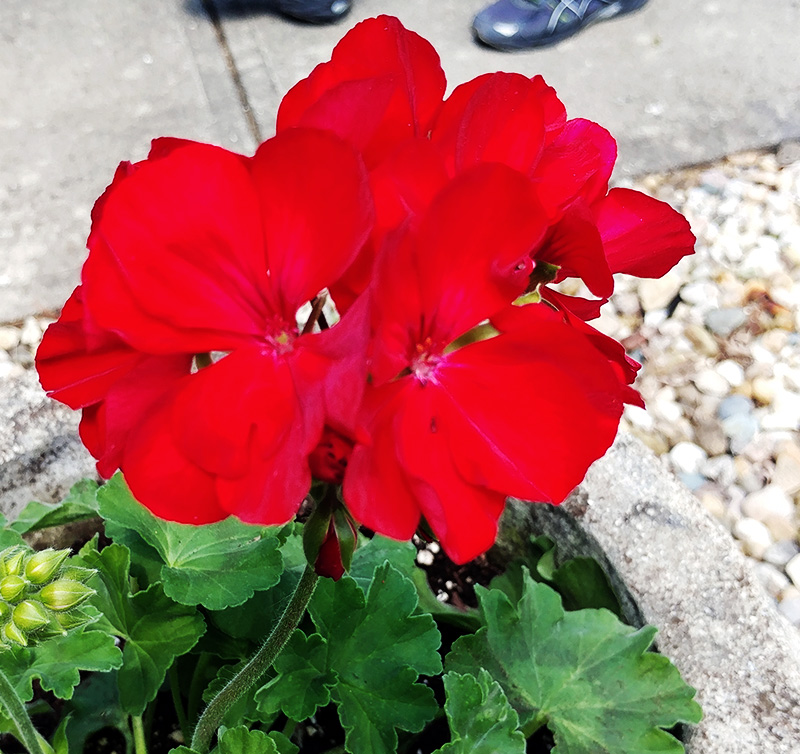
Pelargonium inquinans
Taxonomy
- Kingdom: Plantae
- Clade: Tracheophytes
- Clade: Angiosperms
- Clade: Eudicots
- Clade: Rosids
- Order: Geraniales
- Family: Geraniaceae
- Genus: Pelargonium
- Species: Pelargonium inquinans
Common Names by Region
- Scarlet Geranium
- Scarlet Pelargonium
- Zonal Geranium (applied broadly to the garden hybrids it parents)
- Rooimalva (South Africa)
Description
Growth Habit
An erect, softly woody shrub or subshrub, branching from the base into a rounded bushy form. In cultivation it is grown as a bedding and container plant; in its native ground it builds a persistent, semi-succulent frame.
Leaves
Leaves are:
- rounded to kidney-shaped with shallow, softly scalloped lobes
- velvety and finely hairy, with a soft matte surface
- sometimes marked with a faint darker “zone” — the trait that gives the zonal geraniums their name
- aromatic when bruised, in the manner typical of Pelargonium
Flowers
The signal feature:
- Dense, domed clusters (umbels) held above the foliage on long stalks
- Individual flowers vivid scarlet-red, five-petaled, slightly irregular
- The two upper petals often narrower than the lower three — the asymmetry that separates Pelargonium from true Geranium
- Blooms open in succession, carrying color over a long season
Known Range
- Native to: the Eastern Cape of South Africa
- Naturalized and cultivated worldwide in temperate and Mediterranean climates
- One of the foundational parent species behind the garden zonal geranium (Pelargonium × hortorum), so its genes are present in bedding plantings across North America and Europe
Grown as an annual or overwintered container plant in cold-winter regions like Pennsylvania.
Care / Habitat
- Light: Full sun to light afternoon shade; heaviest bloom in full sun
- Soil: Well-drained, on the lean side; tolerates poor ground and dislikes wet feet
- Water: Moderate; allow the surface to dry between waterings — drought-tolerant once established
- Temperature: Warm-preferring and frost-tender; foliage damages at first frost
Thrives in:
- containers, window boxes, and raised beds
- hot, dry, reflected-heat sites (near pavement or stone) where fussier plants struggle
- Mediterranean and temperate-summer gardens
Propagation / Reproduction
- Readily propagated by:
- softwood stem cuttings (fast and reliable — the standard method)
- seed (slower; hybrids often don’t come true)
Cuttings root easily in a matter of weeks. Overwintered stock plants supply spring cuttings, which is how gardeners carry a favored color year to year.
Pests / Diseases / Threats
Tough overall, but watch for:
- Aphids and whitefly
- Botrytis (grey mould) in cool, damp, crowded conditions
- Bacterial and fungal leaf spot
- Edema — corky blisters on leaf undersides — from overwatering in low light
Deadheading spent umbels and giving the plant air movement heads off most of the fungal trouble.
Ecological Role
A nectar and pollen source over a long bloom window.
Attractive to:
- bees and hoverflies
- butterflies
- in its native range, sunbirds and specialist pollinating insects
The open-faced scarlet umbels function as a broad, high-visibility landing platform, and the extended flowering season keeps the resource available well past many spring bloomers.
Additional Notes
- Genetically foundational to the ubiquitous bedding geranium — much of the red “geranium” color in North American plantings traces back to this species
- Semi-succulent stems store water, underwriting its drought tolerance
- The aromatic foliage deters some browsing herbivores
- Not frost-hardy in Cambria County; grown here as a seasonal or overwintered container plant
Maintenance / Management
- Deadhead spent flower heads to keep bloom moving and reduce disease
- Pinch young plants to drive branching and a fuller habit
- Feed lightly through the growing season; overfeeding pushes leaf at the expense of flower
- Overwinter indoors in a cool, bright spot, or take cuttings in late summer to carry the plant through
Cernunnos Foundation Note
Pelargonium inquinans is a lesson in lean-ground resilience. It asks little — poor soil, reflected heat, intermittent water — and returns a long, high-visibility bloom that feeds pollinators past the spring rush. In a planting system it fills the hot, marginal, hard-surface niches that defeat thirstier ornamentals, doing real ecological work in exactly the sites usually written off as decorative dead zones. Its deeper value is genetic: as a parent of the modern zonal geranium, it’s a reminder that the toughness bred into a common bedding plant traces back to a specific wild species and the dry Eastern Cape ground that shaped it.
Field Note — ID caveat
The rounded, softly scalloped and hairy leaves, the domed scarlet umbels, and the two-narrow/three-broad petal asymmetry place this firmly in Pelargonium — a zonal geranium, not a true Geranium. The filename calls it P. inquinans, the wild parent species, and that’s consistent with what’s shown. Worth flagging plainly: the overwhelming majority of red bedding “geraniums” sold and planted are Pelargonium × hortorum hybrids descended from P. inquinans crossed with P. zonale, not the pure species. Without a nursery tag or a look at the stem and stipules I can’t fully separate the true species from a hortorum hybrid. Published as best read; correct to P. × hortorum if a grower tag says so.
Post Views: 191